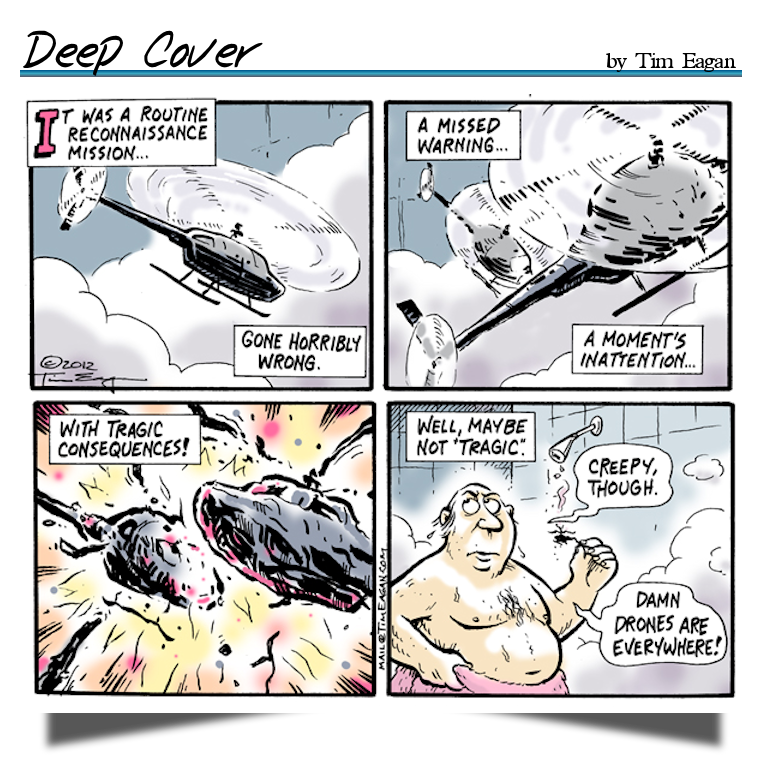
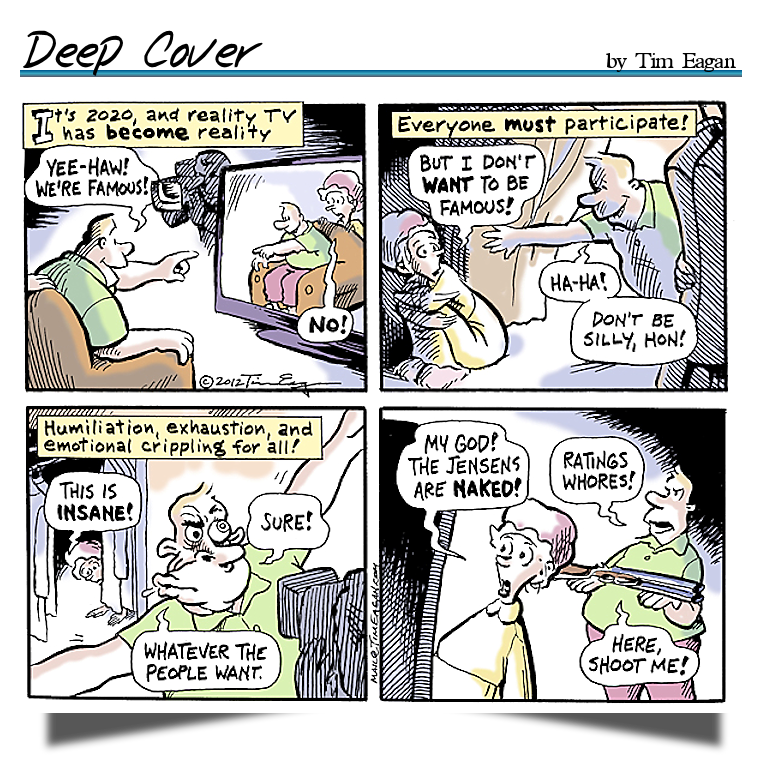
Greensite… on losing Adolph’s… Steinbruner… lies and more lies, BESS… Hayes… Sierra Club and State Parks collaborate?… Patton… To be or not to be…Matlock… pessimism…betrayal…love me…Eagan… Subconscious Comics and Deep Cover … Webmistress serves you… Jummy Carr fixing America… Quotes on… “Ennui”

|
|
If you want to pitch in to
|

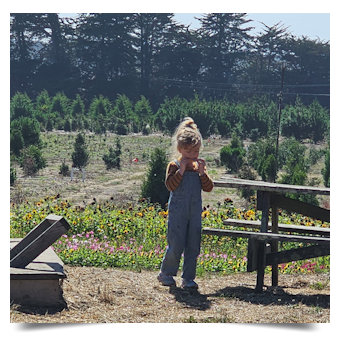
REVISITING THE PUMPKIN PATCH. As I mentioned last week, we went to the pumpkin patch at Rancho Siempre Verde in Pescadero. It was fantastic! See the picture on the right for proof – that’s my granddaughter, with one of the flower fields in the background, and the Christmas trees beyond that. I’m repeating the info this week, because it goes on through the month of October! In other words, you still have time!
Fall festival! Your ticket is per car, up to 6 people. For this, you get 5 pumpkins: 1 large, 2 medium, 2 small, a bucket of flowers, and organic farm apples. There’s a huge swing and a covered slide, tractor rides, and
 general running around for kiddos to do. They have picnic tables all over, if you want to bring a lunch and hang out. We celebrated a birthday here last weekend, bringing food and cake from Gayle’s. It was fabulous! After lunch, we all collapsed in the available hammocks for a bit, and my daughter would kill me if I posted pictures of that…
Back to the activities: as add-ons, you can pick vegetables, get more pumpkins, and pick more flowers. They also sell wreath forms, so you can use their equipment to make yourself a wreath.
I need to repeat that part: they have tables with wreath-making equipment! It’s a whole mechanical thing that you step on to clamp the wreath around the flowers you pick for it. Best part of the entire day! And they will show you how to use it.
The fall festival and the Christmas Tree sales helps finance the produce growing that they do on the farm. Volunteers do a lot of the labor. Currently, 95% of their vegetables and fruit gets donated through their partnership with the Berkeley Food Network, amounting to between 25,000 and 35,000 lbs of organically grown food getting put in the hands of the food insecure.
You should check out their website, come get some pumpkins, come back later in the year to pick your own Christmas tree, and who knows – maybe volunteer?
~Webmistress
STEPHEN KING: A NECESSARY EVIL. Prime Video, Magellan TV. Movie. (7 IMDb) 
Stephen King: A Necessary Evil – welcome to Spooky Season!
“Quadriplegic … unwed mother … telekinesis… waffle hut… and drat, aliens again” – Stephen King with his plotting dartboard.
Stephen King is one of those authors whom I enjoy as a person, but who makes my teeth itch as a writer. Which is why I really enjoyed “Stephen King: A Necessary Evil”- all about King and how/why he thinks about things. Behind the mind of the Shining, Misery, IT!, Stand By Me, the Green Mile, Shawshank Redemption, etc. Not spooky at all, except in just how much he has written (over 200 short stories alone), and impacted readers around the world for the last 5 decades. Fully worth a watch (and no surprise aliens at the end)
~Sarge

PRACTICAL MAGIC 2. In theatres. Movie. (6.3 IMDb) 
Practical Magic 2: Magical Boogaloo… The romantically cursed Owens sisters are back, along with the principal cast: Sandra Bullock, Nicole Kidman, Stockard Channing, and Dianne Wiest. Joining them are Joey King and Maisie Williams as Sally’s daughters, who have inherited both the family gift and its rather unfortunate fine print.
The basic premise, for those who missed the original: an Owens ancestor, determined to protect herself from the heartbreak of love, cast a curse that has plagued the family for generations. Any man who falls in love with an Owens woman dies. This time around, it’s the younger generation’s turn to deal with the problem.
Unfortunately, the story has been so drastically truncated from Alice Hoffman’s novel (The Book of Magic) that both the plot and the characters suffer. Maisie Williams, in particular, is completely wasted. It’s fun to see everyone together again, but the whole thing feels fragmented, as though large chunks of the story were left on the cutting-room floor.
A pleasant bit of fluff if you’ve got the time. Otherwise, wait for the streaming release. Worth a casual watch, but hardly worth a trip to the theater.
~Sarge
OBSESSION. Peacock. Movie. (7.8 IMDb) 
Obsession is less a “be careful what you wish for” story than a warning to be careful what someone else wishes about you. What begins as desire curdles into something far more complicated, until it becomes difficult to tell who is really the villain and who is simply the victim of a wish that has gone badly wrong. The result is a modest but effective little story about longing, control, and the danger of getting exactly what someone thinks they want. Definitely worth a watch.
~Sarge
KATLA. Netflix. Movie. (7 IMDb)
Katla is bleak in the best possible way, set beneath the ash-gray skies of a small Icelandic town, Vik, where everyone seems to have learned to survive by saying as little as possible. But when the volcano begins returning people who should not be there, it does more than produce doppelgangers; it drags old grief, guilt, resentment, and buried secrets out of lives already worn thin. What begins as a supernatural mystery gradually becomes something more unsettling, asking whether identity is really a matter of being the “original,” or whether the person who loves more deeply, suffers less damage, or makes better choices might have the stronger claim to that life. Quiet, strange, and relentlessly melancholy, Katla makes its frozen landscape feel like an extension of the people living in it: apparently still, but with something hot and dangerous moving underneath. Worth a watch.
~Sarge
THE LAST HOUSE. Netflix. Movie. (5.5 IMDb) 
Buñuel’s The Exterminating Angel meets Lovecraft.
This is the ultimate “bottle story.” A suburban Seattle family wakes up one morning to find they can’t leave their house – and neither can anyone else on the block, or maybe anywhere. Some kind of mostly unseen force has sealed everyone in, and it brings the rain with it. Endless, relentless rain.
Stories like this always get under my skin. There’s a very specific kind of tension that kicks in once it starts to feel like there’s no way out – I stop hoping for a clever escape and start just wanting these poor people put out of their misery. That’s not a knock on the film; it’s a testament to how well it builds dread. You feel the walls closing in right along with the family.
What makes it work is the slow unraveling – watching ordinary people get inventive out of sheer necessity, rationing food, rigging up ways to collect water, turning on each other and then back to each other again. It’s as much a study in psychological survival as physical survival. The monster stuff, when it finally shows up, feels almost like an afterthought bolted onto a much stranger, much better film about isolation and endurance – but even that tacked-on quality has a certain charm, like the movie couldn’t resist giving its dread a shape.
Worth a watch.
~Sarge
THE BACKROOMS. In theatres, PrimeTV. Movie. (6.8 IMDb)
The Backrooms, like Slenderman and Creepy Pasta, grew out of the internet, a new kind of horror born from the post-Covid emptying of once-populated spaces. The Backrooms are both a genre and a reaction to liminal spaces: those empty places between places. Abandoned terminals, shopping malls, office buildings. They can be fascinating, but also deeply unnerving.
The Backrooms movie takes that unease and turns it up to 12, suggesting these are places misremembering themselves: genuinely endless hallways, random fragments of stairs, windows where windows shouldn’t be. Even people become fragmented, misremembered.
For anyone who’s ever found themselves unnerved not by boogeymen, but by places that just aren’t right, this hits a very particular nerve. Well worth a watch
~Sarge
|
Sarge, aka Jeffery Sargent, cut his teeth on the Golden Age of Hollywoood on TV and with regular trips to the Sash Mill. Film classes then, at Cabrillo with Morton Marcus, broadened his scope – he found he preferred Keaton over Chaplin, and Akira Kurosawa was his Yoda. Sarge spent 15 years working in Special Effects, on everything from Starship Troopers to Battlestar Galactica. He is a staunch geek who has a weak spot for Cozy Mysteries and loathes “Reality” shows. While he doesn’t care for the unrelenting banal horror of “True Crime”, he licks his lips over a twist like the end of Chinatown. Email Sarge at JeffLSargent@gmail.com |
September 28, 2026

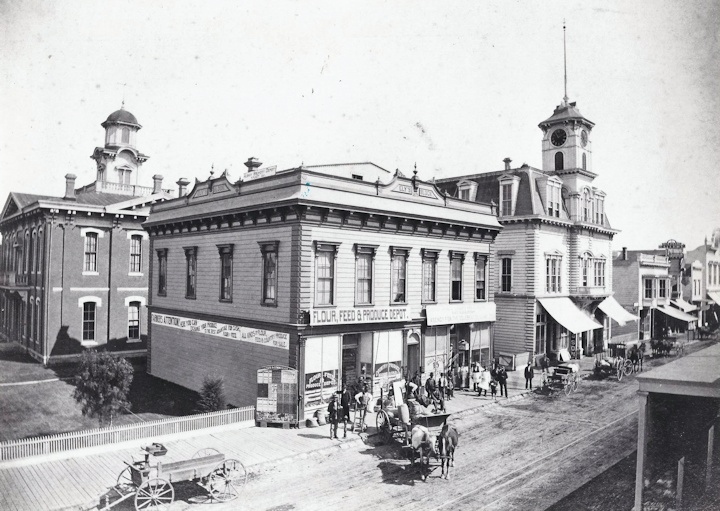
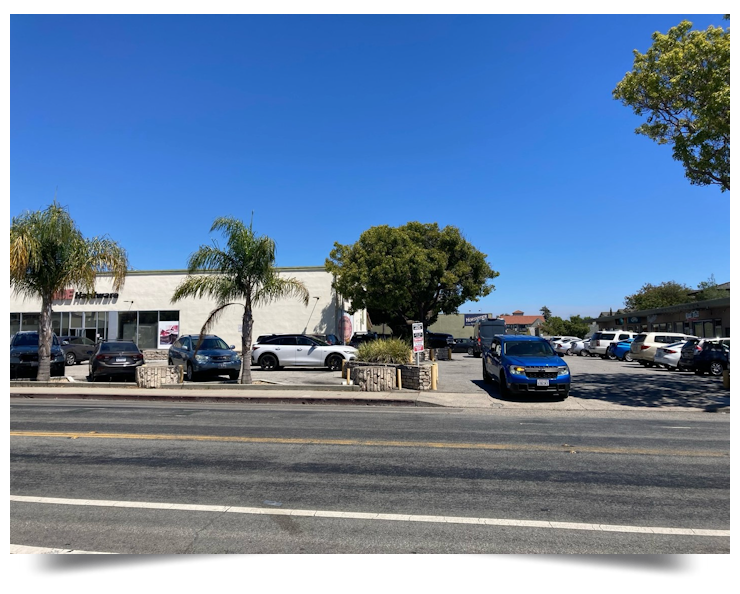
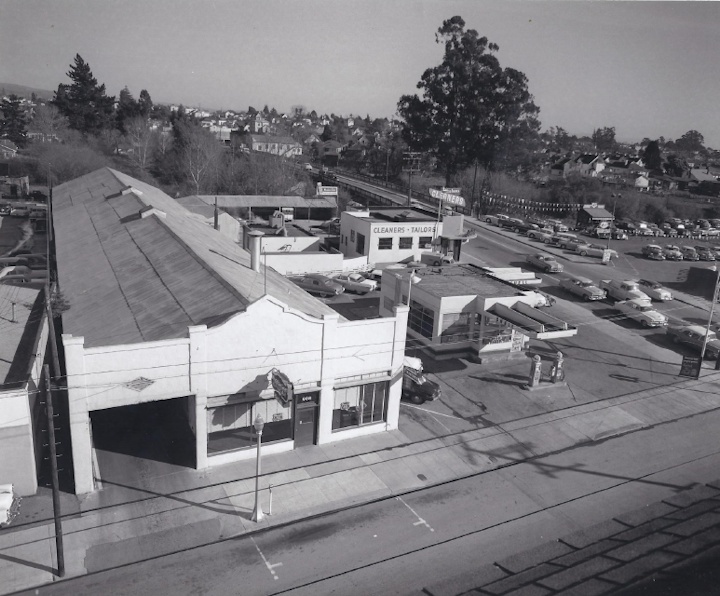
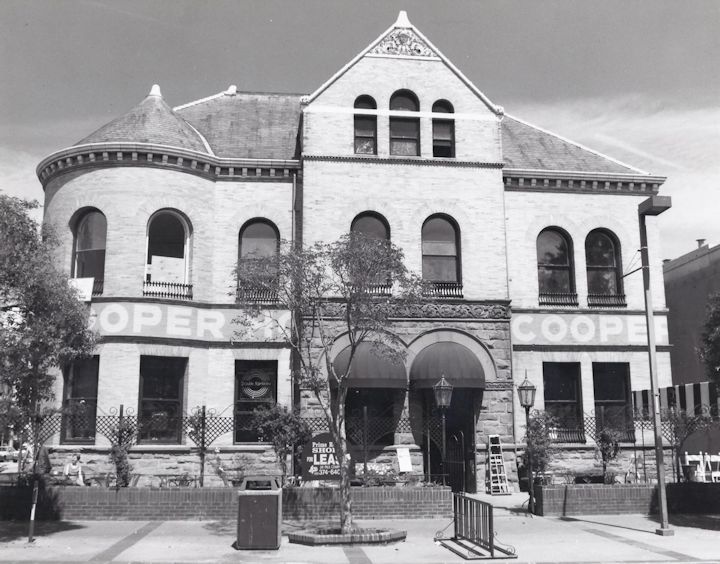
This was Adolph’s. At least it was from 1960 until 2003 when the business changed hands. It was reduced to a pile of rubble last week and all that rubble is presumably going to the landfill. So goes the familiar, so go memories. Both have low standing in today’s Santa Cruz.
Despite that, many long-time locals are sharing their fond memories of Adolph’s on social media, as news of its demolition circulates. Mine goes back to 1979. I had just been hired by UCSC to develop a Rape Prevention Education Program. The campus had never had such a program before and it was greeted with mixed feelings and reactions. This was an era when universities believed that rape was not a university problem. As is often the case, it was the efforts of one person who broke this myth apart sufficiently to start a movement. Maria Sokovitch was that one person. From UC Berkeley, she did the hard work to pull together the support needed and modest funding to get a commitment from all UC campuses to pilot a Rape Prevention Program and hire a coordinator to do that work on each UC campus. I was that person at UCSC.
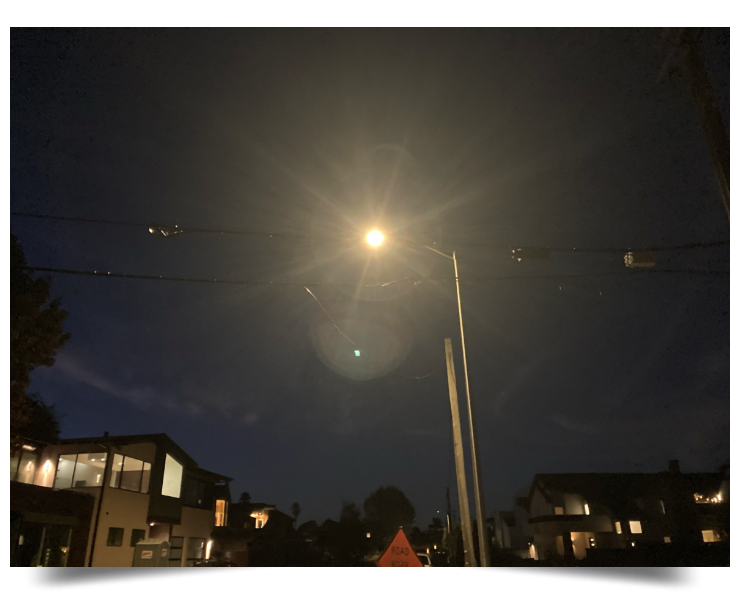
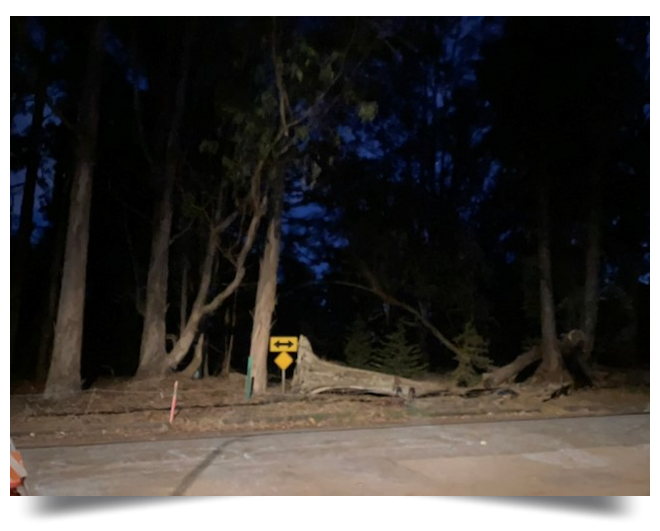
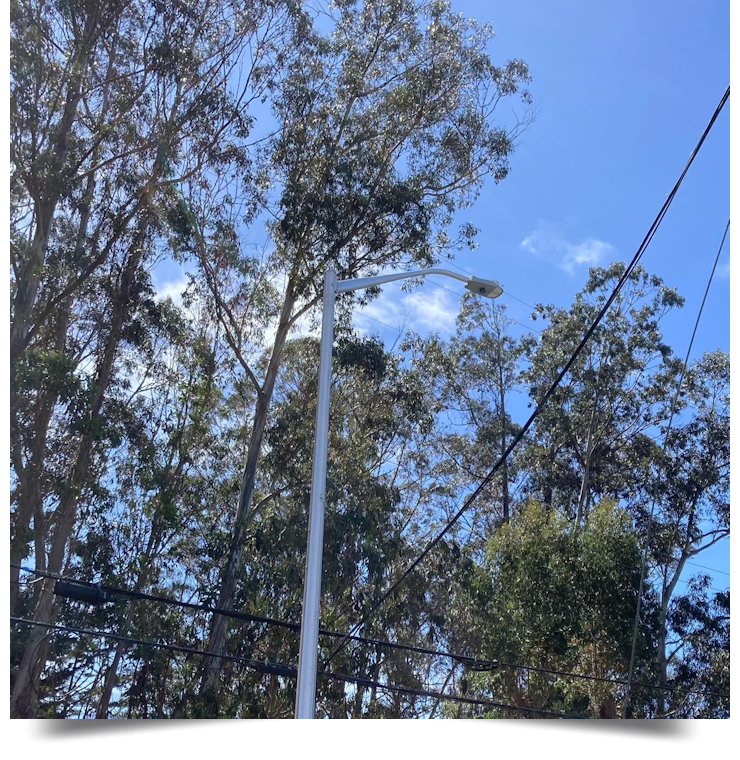
The strongest support and acceptance came from the UCSC Police Department. Then Police Chief Gene Stone (unfortunately now deceased) suggested a Safety Committee consisting of the Police Chief, the Fire Chief, the head of Campus facilities and me. For each meeting we headed in the Chief’s car down from campus to Adolphs. We then drove around town discussing the issues that had come up over a splendid lunch. And not all talk. There was a campus plan to make the small bus shelters brightly lit. I offered that doing so would greatly reduce women’s safety; that a bright light would more easily expose a lone woman and make it harder for her to see into the darkness beyond the bus shelter. That a soft light was better since she could see beyond it and she would be less exposed. And so it was done, the bright lights scrapped and the soft lights remain to this day. That lighting principle still applies but is usually ignored under the myth that brighter lights increase safety.
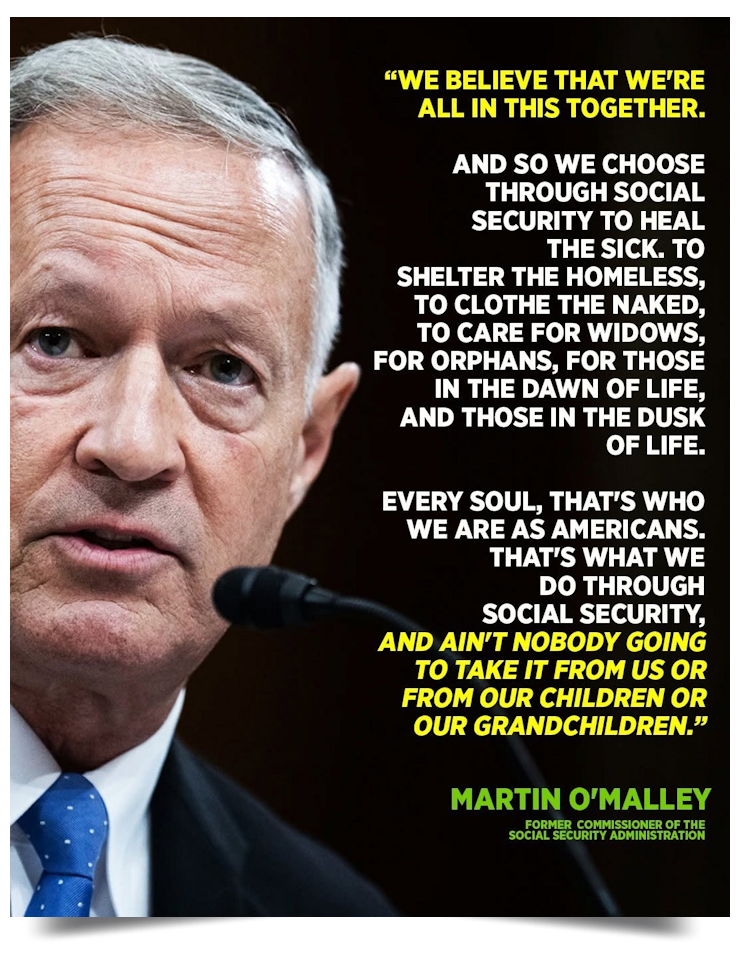
Given those memories, it was with a cry of sadness that I reacted on first seeing the pile of rubble that used to be Adolphs. But Adolph’s is not the first and won’t be the last local, long-time business or building to be bulldozed under state housing laws. Our city council throws up its hands and says there is nothing it can do! That appears to not be accurate.
By the time you are reading this, the deadline for public comment on the city’s renewed application for something called a Pro-Housing designation will be over. But the issue will come to council so be prepared. Below is what I submitted to the Community and Development Department (formerly Planning) and the council. I think it is clear. You decide whether the city has no choice about overbuilding. Note that “by right” and “ministerial” mean no public hearings.
*************************************************
To Community Development and City Council,
September 28, 2026
I oppose the city’s application to renew its Pro-housing designation. The city is misleading the public into believing that such designation is not exceeding current state housing laws but is just a recognition of the city’s current practices and policies. That statement, copied below from the department website is deceptive and inaccurate. Or, if the sample of the 48 Pro-housing Policy Descriptions copied below is indeed the city council’s adopted policy, then it should be re-examined and not be continued with a further application.
The public is increasingly expressing a negative reaction to existing state housing laws as more projects are built, more neighborhoods impacted and small businesses displaced. The council’s declaration of powerlessness to do anything about such state mandates is hypocritical in the light of the city’s voluntary application to go above and beyond state mandates via the pro-housing designation. The leg-up it offers the city for grants is not worth the sacrifice it demands. I urge you to discontinue the pro-housing designation renewal.
Gillian Greensite
The Prohousing designation does not create any new policies. It does not change what can be built, how much can be built, or where things can be built. It recognizes existing programs and established Council direction.
Community Development website.
- A sample of 7 of the 48 Pro-housing Policies
- 1A Sufficient sites, including rezoning, to accommodate 150 percent or greater of the current or draft RHNA, whichever is greater, by total and income category.
- 1B Permitting missing middle housing uses (e.g., duplexes, triplexes, and fourplexes) by right in existing low-density, single-family residential zones in a manner that exceeds the requirements of SB 9 (Chapter 162, Statutes of 2021, Gov. Code, §§ 65852.21, 66411.7).
- 1D Density bonus programs that allow additional density for additional affordability beyond minimum statutory requirements (Gov. Code, §65915 et seq.)
- 1F Eliminating minimum parking requirements for residential development as authorized by Government Code section 65852.2; adopting vehicular parking ratios that are less than the relevant ratio thresholds at subparagraphs (A), (B), and (C) of Gov. Code section 65915, subdivision (p)(1); or adopting maximum parking requirements at or less than ratios pursuant to Gov. Code section 65915, subdivision (p).
- 2A Establishment of ministerial approval processes for multiple housing types, including, for example, single-family, multifamily and mixed-use housing.
- 2E Absence or elimination of public hearings for projects consistent with zoning and the general plan.
- 3G Establishment of pre-approved or prototype plans for missing middle housing types (e.g., duplexes, triplexes, and fourplexes) in low-density, single-family residential areas.
- 1B Permitting missing middle housing uses (e.g., duplexes, triplexes, and fourplexes) by right in existing low-density, single-family residential zones in a manner that exceeds the requirements of SB 9 (Chapter 162, Statutes of 2021, Gov. Code, §§ 65852.21, 66411.7).
| Gillian Greensite is a long time local activist, a member of Save Our Big Trees and the Santa Cruz chapter of IDA, International Dark Sky Association http://darksky.org Plus she’s an avid ocean swimmer, hiker and lover of all things wild. |
THEY LIED AND LIED AND LIED ABOUT THE MOSS LANDING BATTERY FIRE SAFETY
Last Friday, Never Again Moss Landing held a press conference in Moss Landing to announce new and troubling information brought to light by a whistleblower from within Vistra’s CTEH consultant company.
I urge you to read this affidavit, especially pages 92-99.
Ms. Dixon declares:
- Unprotective Air Sampling Plan
Until she came forth, neither the public nor Monterey County officials had been able to access any air sampling and analysis plan. However, she made the document available. It is dated February 17, 2025, the day before the second fire occurred at the Moss 300 Vistra battery site.
CTEH Moss Landing Incident Draft Community Air Monitoring SAP
- Inadequate Scope of Chemical Testing
“critical contaminants commonly associated with lithium-ion battery fires—such as dioxins, PFAS/PFOA, polycyclic aromatic hydrocarbons (PAHs), and semi-volatile organic compounds (SVOCs) were not included in the sampling scope. This omission significantly limited the ability to characterize the full extent of potential community exposure.”
- Overreliance on Non-Specific and Real-Time Screening Tools
“The plan relied heavily on handheld real-time monitoring instruments and total VOC measurements, rather than compound-specific laboratory analysis”
“These tools are inherently limited and do not identify specific toxic compounds, thereby obscuring the presence of hazardous substances at potentially harmful levels ”
- Use of Insufficiently Protective Exposure Benchmarks
The monitoring strategy relied primarily on short-term, acute exposure guidelines such as Protective Action Criteria (PAC) values, Acute Reference Exposure Levels (RELs), and similar screening thresholds. No meaningful consideration was given to chronic exposure limits, cumulative risk, or carcinogenic impacts, despite the known persistence and longterm health risks associated with many combustion byproducts.
- Failure to Specify or Utilize Adequate Detection Limits
The plan did not clearly define method detection limits (MDLs) or reporting limits for laboratory-based analyses, making it impossible to determine whether testing was sufficiently sensitive to detect low-level but hazardous exposures. As identified in the technical review, this omission undermines the reliability of conclusions drawn from the data.
- Deficient Monitoring Location Strategy
Monitoring locations were not consistently aligned with plume dispersion patterns or downwind exposure areas. As a result, certain communities likely impacted by airborne contaminants were not adequately sampled. This deficiency parallels issues I observed at other deployments, where monitoring placement appeared to minimize detection of elevated concentrations.
- Lack of Indoor, Surface, and Biomonitoring Assessments
Despite shelter-in-place advisories issued to the public, the plan did not include indoor air sampling, surface contamination testing, or biomonitoring of exposed individuals. This represents a significant gap in assessing real-world exposure conditions.
- Internal Handling of Action Level Exceedances
The plan states that when real-time monitoring detects concentrations above CTEHdefined action levels, those exceedances are communicated internally up the chain of command rather than directly disclosed to the public. Based on my experience, this internal reporting structure creates opportunities for data to be contextualized, minimized, or withheld.
- Observed Pattern of Unreported Exceedances
In the course of my work across multiple CTEH deployments, including Moss Landing and other incidents, I have regularly witnessed instances in which air monitoring readings met or exceeded applicable action levels or health-based thresholds but were not formally reported to the public or were excluded from summary communications. This pattern raises serious concerns regarding transparency and the protection of public health.In my professional opinion, the deficiencies observed at Moss Landing are not isolated but rather reflect a broader pattern in which air monitoring programs are structured and implemented in a manner that may underrepresent environmental and human health risks.
CTEH leadership made it clear to us every morning in 6 a.m. meetings that we were not there to investigate or question anything. We were there to reassure. I was told not to share sampling numbers, not to say if it was safe or unsafe, but just to look confident. I repeated what I was told because I thought it was true. But we were misled. And that means we misled others— unintentionally, but no less dangerously.
|
BESS Explosion in La Verne Forces Multiday Evacuation |
The question now is: What will local people elected and appointed to protect the public’s health and safety DO to address this information?
Please contact the Santa Cruz County Board of Supervisors to demand they instruct the District Attorney to investigate and bring charges:
Board of Supervisors <boardofsupervisors@santacruzcountyca.gov>
Please contact the Monterey County Board of Supervisors to demand they instruct the District Attorney to investigate and bring charges:
Monterey County Board of Supervisors <cob@co.monterey.ca.us>
Also, ask: What is the Action Plan that both Counties will follow the NEXT time the Vistra battery storage system (BESS) re-ignites??
THESE ARE NOT SAFE
La Verne, Ca LFP battery fire…why people were not allowed to go back home after the evacuation order
Lithium-ion battery fire disrupts another California community, raising questions about storage, safety. Firefighters used 1800 gallons/minute for many days to keep the heavy metals in the smoke plume from drifting over adjacent residential areas.
USING THE FIRST-EVER “STATE OF THE COUNTY” FOR A CAMPAIGN PLATFORM
The Board of Supervisors scheduled a Special Meeting at 6pm on September 29 in the Board Chambers of 701 Ocean Street. It was deemed a “State of the County” presentation, and was the “first-ever” such event.
The “State of the County” turned out to be a taxpayer-funded campaign to influence peoples’ votes in favor of Measure E, a half-cent sales tax on the November 3 ballot. It provided nothing more than a fuzzy feel-good oratory from Chair Martinez, without any clear direction as to how the County will address what CEO Coburn warned of a $30 million budget shortfall next year, and a $285 Million short fall expected over the next six years.
Chair Martinez opened with a speech about the meaning of local government and the importance of making life better for the people here. She turned it over to CEO Nicole Coburn to talk about the financial state of the County. Chair Coburn touted the value of Measure E for quite awhile.
So, my question is: was using tax-payer facilities, and having many high-level paid County workers there, an expenditure of government funds to campaign for ballot Measure E, a general fund half-cent sales tax the CEO wants?
Chair Martinez is a co-chair of the Yes on Measure E Political Action Committee.
Here is what I found with some research:
Under California law, local government bodies and officials are strictly prohibited from using public funds, equipment, or resources to engage in partisan political advocacy or influence the outcome of an election.
Government Code Section 8314 makes it illegal for local officials and staff to use public resources for campaign or personal purposes.
To verify specific rules, prohibitions, and legal restrictions on what is permitted or prohibited for local agencies and officials regarding ballot measures, consult official California statutory guidance or legal resources, such as the California Government Code Section 54964, Government Code Section 8314, and the California Supreme Court precedent in Stanson v. Mott (1976)
FOUNDATION REPORT: CAN A PUBLIC ENTITY SPEND PUBLIC MONEY ON A CAMPAIGN TO RAISE THE PUBLIC’S TAXES?
Misusing taxpayer dollars for campaigns by Dan Walters
Local Ballot Measures: The Line Between Information and Campaigning By Craig Steele1 and Chelsea A. Straus, Richards Watson Gershon
The County’s own Election Dept. information states this activity is not allowed:
Guide to Political Activities
Restrictions:
- Use of Position to Influence Other Employees. An officer or employee of the County may not use his/her position to influence the political activities of other employees. (Government Code Section 3204)
- Use of County Funds to Influence Election. As a general rule, the use of public funds or campaign purposes to influence voters in a pending election is prohibited (Mines v. DelValle (1927) 201 Cal. 273; Stanson v. Mott (1976) 7 Cal. 3d 206) absent clear and unmistakable authority to do so. There is no such existing statutory authority for a County.
- Nevertheless, a County does have the authority to use public funds for informational purposes to provide the public with a fair representation of relevant information relating to a ballot measure which the County has submitted to the voters (Stanson, supra, at 221).”…. a fair presentation of the facts will necessarily include all consequences, good and bad, of the proposal, not only the anticipated improvement … but also the increased tax(e s) …. and other less desirable consequences as may be foreseen (Citizens to Protect Public Funds, The Board of Education (1953) 98 A.2d 673, 677).
The following are examples of uses of funds, which are clearly campaign expenditures:
- County Payment of Salary or Expenses for Campaign Activity. Contributions by a governmental entity to a political campaign are per se illegal as gifts of public funds (FPPC v. Suitt (1979) 90 Cal. App. 3d 125; Cal. Const. Art. 16 S 6). This includes contributions in the form of payment of salary or expenses of county officers, employees, or agents while they are performing “campaign activities” as opposed to legislative, executive, or administrative functions (Suitt, supra at 130-131). The FPPC has adopted a regulation 2 Cal. Adm. C. S 18420) listing (but not exhaustively) activities which are “campaign activities.”
So, if it bothers you that Chair Martinez, and CEO Coburn used taxpayer-funded facilities and had high-level paid staff attending a political campaing event in the Board of Supervisors chambers, please file a complaint with the FPPC.
VOTE NO ON MEASURE E
Do you think it is right that the County Supervisors and CEO are grabbing for the wallets of those who can barely make ends meet now, asking for another half-cent sales tax that will throw the level of taxation in Watsonville, Scotts Valley and Santa Cruz above the legal 10% sales tax rate? It is only made “legal” with Senator John Laird’s slight of hand work to get the Governor to sign SB 762.
Just say NO, and make our elected County leaders take responsibility for years of mismanagement under former CEO Carlos Palacios. For more, see stopmeasuree.org
NOW LEGALLY USING RECYCLED WATER FOR IRRIGATION
Soquel Creek Water District applied for permission to expand the use of treated sewage water for irrigation at the PureWater Soquel Project Advanced Water Treatment Facility next to the Chanticleer pedestrian overcrossing (aka the Whale Bridge).
Using the treated water was not allowed in the Project Permit authorized by the Central Coast Regional Water Quality Control Board. Now it is..
You can find other interesting reports about this Project on the GeoTracker, but will need to scroll down quite alot to find it.
WRITE ONE LETTER. MAKE ONE CALL. DEMAND COUNTY SUPERVISORS WORK TO DEVELOP AN ACTION PLAN FOR FUTURE MOSS LANDING REIGITION TOXIC PLUMES. VOTE NO ON MEASURE E.
DO ONE THING AND MAKE A BIG DIFFERENCE.
Cheers,
Becky
|
Becky Steinbruner is a 30+ year resident of Aptos. She has fought for water, fire, emergency preparedness, and for road repair. She ran for Second District County Supervisor in 2016 on a shoestring and got nearly 20% of the votes. She ran again in 2020 on a slightly bigger shoestring and got 1/3 of the votes.
Email Becky at KI6TKB@yahoo.com |
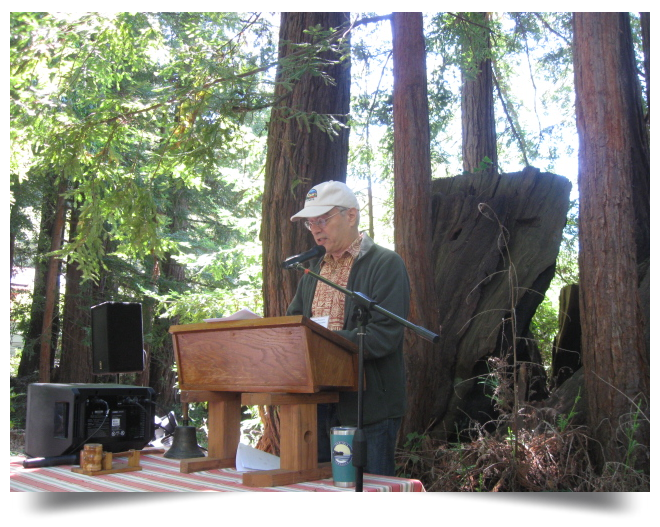
Last Friday, September 25th I enjoyed a vibrant interview with Norman La Force a leading conservationist in our region. Mr. La Force is a member of the California Sierra Club’s State Parks Committee and helped me to understand the history of success as well as the current and ongoing struggles of working with State Parks to conserve habitat and protect wildlife while providing equitable access to parks across our region. Folks joined us by calling in, adding to the depth of the conversation. This week’s column is a distillation of the themes of that radio show, which you can hear in full at this link. I’ll be back on the air with the BrattonOnline show (which airs every Friday, 6-7) with more discussion of the theme of wildlife conservation on public lands during my Radical Center Radio Hour, October 16, 6-7 pm.
Norman La Force – A Powerful Ally for Nature
Norman holds a JD in law from the Georgetown University Law Center and he has used his legal expertise as an environmental protection attorney for many years, helping the Sierra Club, Golden Gate Audubon Society, and other local environmental organizations to conserve wildlife and habitats around the greater San Francisco Bay Area. He is President and General Counsel for SPRAWLDEF “Sustainability, Parks, Recycling and Wildlife Defense Fund.” And, for many decades, Norman has been one of the few long-time dedicated members of the Sierra Club California’s State Park Committee. His focus has been on wildlife conservation broadly and especially in the face of ongoing pressures to expand visitor use of state parks.
One of his greatest joys was co-leading the establishment of Berkeley’s McLaughlin Eastshore State Park State Seashore, described in his memoir, Creating the East Shore Park, An Activist History. During our conversation, he described the initial resistance of State Parks to accept such a park as it was too urban. Decades later, Parks professes great pride in the park as a prime example of providing equitable access. The park is one of the most visited in the State.
The Sierra Club’s State Parks Committee
For decades, Sierra Club California has convened its State Parks Committee. Its charter is to ensure that all Parks are open and available for public use and that there is adequate funding for operations and maintenance. Among other things, the Committee works to advocate for the preservation and protection of the natural and cultural resources of California’s State Parks. It also tries to ensure equitable access by all Californians to our state parks.
Norman suggested that one of the ongoing and greatest tensions between the Sierra Club and State Parks is the agency providing adequate protection for wildlife and habitat, including following regulatory guidance to create park plans that address wildlife and habitat protections. He noted that Parks just plain doesn’t abide by several relevant Public Resources Codes – § 5002.2, § 5019.5, and § 5001.96, which require Parks to create plans for each park, in those plans to analyze the appropriate level of visitation and then to manage within those limits.
Why Can’t Parks Do Right?
Mr. La Force provided many examples of the pressures State Parks is under that contribute to their neglect of natural resource protections in favor of poorly planned visitor use. For instance, he noted that Parks has been swayed by recreational advocates from the Off Highway Vehicle and Mountain Biking lobbies. He highlighted a mountain biking advocate campaign using the alluring phrase ‘Access for All,’ which may suggest equitable access but in fact seeks to expand the influence of what is, at least in East Bay Parks, a small minority of users. East Bay statistics suggest 80% of users are hikers, 10% mountain bikers, and the remaining mostly equestrians. We discussed how these groups are conflicting users and mountain bikers can unfairly ‘displace’ others, such as families with small children and other pedestrians. Nevertheless, lobbying groups have been successful at influencing Parks to overlook such realities.
Another reason for natural resource neglect that Norman pointed out is budgetary shortfalls. He noted that Parks has seen decades of budget shortages resulting in their own documentation of a one billion dollar backlog of ‘deferred maintenance,’ which is equal to a full year of their overall budget. This budget shortfall doesn’t address the ongoing degradation of habitats and species which somehow doesn’t even get tabulated and reported to the Legislature when addressing budget issues.
Over Visitation
Two of the callers into the radio show highlighted issues of over visitation in parks, one for Point Lobos State Natural Reserve and one for Nisene Marks State Park. Callers noted overcrowding and asked Norman what might be done. He said that it is clear that we need more Parks. He praised Governor Newsom and Parks for recently creating new State Parks to expand recreational opportunities that might help with overcrowding. He also noted that it is probably important to look towards reservation systems such as were enacted at Muir Woods National Monument just north of the Golden Gate. He also noted that limiting parking can help with overcrowding, suggesting that Parks work with adjoining road agencies to put signs up prohibiting parking.
What Can We Do?
I asked Norman La Force for his advice to people who might want to help California State Parks better meet its mandates to protect wildlife and habitats. He added a phrase to “All Politics is Local” – “All Politics is Personal,” encouraging people to develop relationships with decision makers so that they pay more attention to wildlife protection in parks. Norman suggested people get more involved in individual State Parks by joining, or starting, a ‘Friends of…’ organization. He also suggested that people join local chapters of the Sierra Club and Audubon Society to help them be more effective at making advances with these issues. He also noted that his California Sierra Club State Parks Committee could use volunteers with energy to help advocate for wildlife in State Parks.
|
Grey Hayes is a fervent speaker for all things wild, and his occupations have included land stewardship with UC Natural Reserves, large-scale monitoring and strategic planning with The Nature Conservancy, professional education with the Elkhorn Slough National Estuarine Research Reserve, and teaching undergraduates at UC Santa Cruz. Visit his website at: www.greyhayes.net
Email Grey at coastalprairie@aol.com |
September 30, 2026

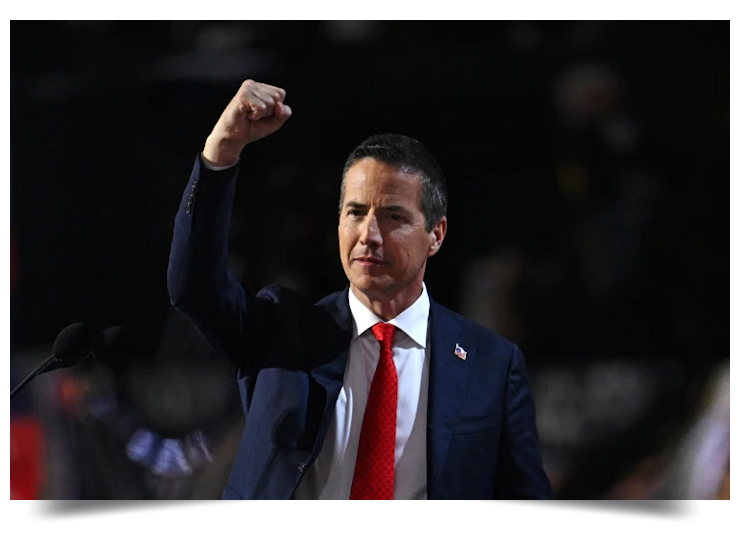
Connor Lounsbury is a Democratic media consultant. Before that, though, he was an actor. In an opinion column that ran in the August 26, 2026, edition of The New York Times, Lounsbury says that “Democrats Need To Learn How To Act.” That is the hardcopy version of the headline on his column. Online, Lounsbury’s thoughts are described by the following headline: “Great Actors Are More Believable Than Democrats.” Jon Ossoff and Alexandria Ocasio-Cortez, pictured above, are Democratic candidates who get Lounsbury’s seal of approval. They’ve both got “presence,” he says, which is the most important thing.
Here’s the quote from Lounsbury’s column that has stimulated my blog posting today (emphasis added):
Democrats’ debates about messaging and ideology are our beautiful lies — not because they are false but because they allow us to avoid our real problems. We are focused on the symptoms of apathy, not the apathy itself. When Hamlet asks, “To be, or not to be?” he is deciding whether to take action in spite of his suffering or check out entirely. It’s the same choice Democrats face today.
You can read the entirety of Lounsbury’s column if you’d like to hear what he has to say about Democratic Party politics at this critical time in our national history. I’d like to comment on the more “existential question” posed by Shakespeare (you know, “to be, or not to be?”). As the quote above should make clear, Lounsbury thinks that question is pertinent to us all, right now, and I do, too.
I am not saying that typical partisan politics is not important, though I’m not a big “party” guy. What I am saying is that the question facing the nation, and facing all of us, who are supposedly in charge, is whether we will be “actors” in the sense of “taking action,” or whether we will be “spectators,” who don’t believe ourselves to be “on stage,” but rather identify with the audience, sitting in their comfortable, or perhaps not so comfortable, seats.
“To be, or not to be” is the true and existential question that faces us all, as we contemplate our lives, and as we determine what our lives mean, and what role we have in our own lives, with the basic and binary choice already described. Are we “actors” or “spectators”? As Shakespeare puts it in Hamlet, we do need to make a fundamental choice and decision about just that question:
Whether ’tis nobler in the mind to suffer
The slings and arrows of outrageous fortune,
Or to take arms against a sea of troubles
And by opposing end them.
So, what is it going to be, friends? Are we just going to get up each day to face those “slings and arrows of outrageous fortune,” as we contemplate the latest actions of our current president, and his largely incompetent cronies, or are we going to “take up arms” (meaning getting personally engaged in the struggle)?
There is no doubt what’s needed – and particularly if we want to side with Abraham Lincoln, and make sure that a government “of the people, by the people, and for the people” does not “perish from this earth.”
“Our lives, our fortunes, and our sacred honor.” That’s the way our Declaration of Independence puts it. Our money, our time, and all our lives. That is what is at stake. That is what we need to put out there, on the table, if we want to preserve self-government in the United States of America. That’s the kind of “acting” we need, and there is enough time for your action, and mine, to make a difference, before November 3rd!
|
Gary Patton is a former Santa Cruz County Supervisor (20 years) and an attorney for individuals and community groups on land use and environmental issues. The opinions expressed are Mr. Patton’s. You can read and subscribe to his daily blog at www.gapatton.net
Email Gary at gapatton@mac.com |
INSTIGATORS, LAME DUCKERY, LATITUDE, AGENCY
Simon Tisdall poses questions on The Guardian,”Feeling depressed about the state of the world? Worried about the future? You’re not alone. Pessimism about politics is the new normal among the peoples of the West.” Tisdall lists the major causes for concern as the conflicts in Europe and the Middle East, and the threats of right-left extremism, stagnating economies, inequality, corruption, terrorism, racism, big tech, mass extinctions, and the climate crisis as the unsettling nightmares we all share. He writes that this “tsunami of gloom” shows encouraging shifts within Russia, Israel and the USA — the instigators of the “major upheavals in the past decade.”
He sees that Putin’s position has become jeopardized by his Ukraine misadventure, and after four years the dissent among his rivals has raised his fears of assassination or a coup which has caused him to cut back on public appearances. We have all seen photos of the long conference table that puts his conferees at one end while he sits several feet away. Israel’s long-serving ‘Bibi’ Netanyahu is facing opposition parties who want to topple his ruling hard-right coalition, with a nationwide vote upcoming at October’s end. He was a prominent influencer on Trump to embark upon his disastrous Iran war, an obvious US-Israel catastrophe. World opinion weighs heavily upon the Israelis, and in light of their leader’s deadly belligerence in the region, he may not survive the balloting.
Trump, on the other hand, barely needs opponents says Tisdall, being his own worst enemy in ignoring the hardships he has fomented with his Iran fiasco. He has betrayed his MAGA base with his tariffs and trade wars, with his abuse of our allies while threatening conquests, not to mention his sucking up to dictators of nations regarded as dangerous adversaries. The dismay, the public pessimism, and feelings of hopelessness are universal as observers have seen the degradation of a once powerful and respected USA. Polls currently show that Trump and his MAGAts may lose control in the midterms, curtailing the president’s power, with impeachment a possibility. “Lame duckery looms,” says Tisdall, “Putin deposed, Netanyahu defeated, Trump defanged and distracted. If it came to pass the world would feel a very different place. Sidelining the chief riders of the storm could go a long way towards changing the zeitgeist.”
Alexander Willis writes on Raw Story, “President Donald Trump has picked up on the fact that a growing number of GOP lawmakers are racing to distance themselves from him as his approval ratings hit record lows.” Nevertheless, his toxicity, unrecognized by him, has led him to contact candidates to vent his dissatisfaction that he is being left out of their tv advertising and off their websites — his overture to voters to “pretend I am on the ballot” being cynically cast aside as poisonous. Some office holders/seekers have broken publicly with Trump, and it has leaked that “the president’s team makes sure to flag for the president examples of 2026 candidates whose campaign websites have scrubbed or minimized references to President Trump and his record.”
To calm him down, Trump’s team last week released a taxpayer-funded ad on Fox that praised him, featuring the song ‘Love Me‘ by JMSN, who said it was used without his permission. Two unnamed sources claim that Team Trump made sure the ad ran on Fox and in the Washington, DC media market, guaranteeing that the president would see it. Mehdi Hasan’s ‘Zeteo’ on Substack, reports, “For starters, Trump has a tiny amount of political support among voters in the DC area. This was yet another example of his advisers lighting many thousands of dollars on fire, just to calm him down.” A couple of weeks ago, a reporter asked Trump who would get his endorsement in a particular run-off election, his answer indicating that he was undecided. The problem being, he had already posted his choice two weeks earlier, so how powerful is an endorsement from a president who doesn’t remember who he’s selected?
Absent any taxpayer complaints, the White House launched yet another treasury-funded tv ad, the third captured by media tracker AdImpact, and shown mainly during two National Football League games on Sunday, featuring imagery of President Trump walking down a hall as the audio has him saying, “This is the final battle. We will cast out communists, Marxists, and fascists. We will throw off the sick political class that hates our country. We will rout the fake news media, and we will liberate America from these villains once and for all.” The ad mimics a 2023 Trump campaign speech, and uses footage from a 2024 campaign ad. The three ads are tellingly being shown as the campaigns heat up for the midterm elections, but the White House maintains these are public service announcements, and very clearly not campaign ads, watchdog group Common Cause suggesting otherwise, terming them to be ‘propaganda.’ Common Cause VP Carol Evans says, “I don’t think you have to be a legal scholar and wonder why the president has to use taxpayer funds to promote his image this close to an election.”
Last week in a fit of pique, Trump banned CNN, Politico, and MS NOW from the White House press pool for not kissing his ring with enough respect — and on national security grounds. As Greg Sargent writes in The New Republic, “He accidentally revealed an Achilles’ heel of sorts,” when several media companies then banded together in solidarity against the ban which then precluded the use of video recording for tv broadcasts; and, since CNN had camera duty that week, so to speak, and no other entity chose to fill in the gap — it made for a huge faux pas for Trump who relishes the spotlight, for better or for worse. Though a judge subsequently blocked the ban, it meant that few cameras were available for the grand ceremonial of China’s President Xi Jinping’s arrival in DC — a disaster for narcissist Trump.
Even after the judge’s restoration of press access to the White House, CNN was barred from joining the press pool on Air Force One traveling with the president to Knoxville, TN for a college football game between the University of Tennessee and the University of Texas, a highly-rated clash between top-rated teams. Video footage shared on social media captured Trump being booed loudly by attendees when the president appeared on the Jumbotron, sitting in a box next to Tennessee Senator Marsha Blackburn. Trump managed a couple of weak fist pumps to the one MAGA-hatted fan he spotted sitting nearby.
A few months ago, former Fox News host Tucker Carlson delivered a jaw-dropping mea culpa for endorsing Donald Trump for president, saying, “I want to say I am sorry for misleading people,” and admitting he would be “tormented” by his backing the con man “for a long time to come.” It seemed that Carlson was embittered by the Epstein coverup and the Iran war debacle, disclosed in a podcast with his brother, Buckley Carlson, a former Trump speechwriter. The brothers agreed that they are implicated in this mess, but no matter how sincere the apology, they are forever stained, even as Buckley calls Trump an “out of control, megalomaniacal, destructive president.” Tucker’s apology comes across as shallow and insincere following his decades of racist, sexist and violent rhetoric as he carpetbagged for his former idol.
Former associates felt Tucker was just doing a bit, playing a boorish demagogue in the ratings game as he slid into Bill O’Reilly’s old slot on Fox News. Playing a bit is hardly forgivable, because knowing better and still being opportunistic at stirring violence against immigrants and Blacks doesn’t cut it. His lies about Dominion voting machines finally broke him, and damaged the Fox bottom line in the end, but he still walked away by earning millions over the years — which he should donate to a nonprofit to prove the sincerity of his apology. Social psychologist Cindy Frantz of Oberlin College, in observing the Carlson duo, feels that Tucker is “basically holding something back, continuing to go through some sort of internal disagreement, or he’s restraining himself from saying something.”
Frantz argues that there are two missing pieces that could have helped sell Carlson’s apology: 1) he didn’t mention any action for making amends for his regrets; 2) the other is an element neither he nor the general public can fix — there’s no interpersonal relationship here, since he’s a public figure before a camera, with too many barriers for people to trust what he says. Speculation is that Carlson has an ulterior motive for the apology, ranging from prioritizing his income, to running for office. The fact that he says, “I want to say I’m sorry,” rather than, “I’m sorry,” distances himself from any direct ownership of responsibility. Jimmy Kimmel commented on his show, “Did anyone know Tucker had a brother Buckley? Tucker and Buckley? That’s as white as it gets. I mean, it doesn’t get any whiter than that. Their parents were an ascot and a monocle.”
The latest Tucker Carlson interview, with NPR’s Newsmakers podcast host Steve Inskeep, has him calling for the president’s removal by his Cabinet under the 25th Amendment, and being particularly critical of the Iran war. The former Fox News host feels that Trump wasn’t the one who ultimately made the decision to join Israel in its attack on Iran — “I don’t think he had the latitude to make this decision on his own.” Carlson suggests that Section 4 of the 25th Amendment be invoked to force Trump out over his threats to “annihilate” Iran, and should also include those in power around the president. “A guy threatening to eliminate the human race and that’s not considered a crime?! It tells you how deranged our moral scale has become. So he should be removed from office for threatening a first-use nuclear strike,” fumed Carlson.
Carlson is not alone among conservatives calling for ousting Trump — prominently, conspiracy theorist Alex Jones and former Georgia Congresswoman Marjorie Taylor Greene have joined a growing chorus of voices for action. Jones, on his InfoWars broadcast in April, said, “The definition of genocide is destroying an entire civilization/people! Trump literally sounds like an unhinged super villain from a Marvel Comics movie. This is not what we voted for!” Greene wrote on social media, “Not a single bomb has dropped on America. We cannot kill an entire civilization. This is evil and madness.”
In the NPR interview, Carlson recalled a chilling statement made by Trump in a private Oval Office meeting, dismissing concerns over a possible Iran action. Carlson challenged the president, saying, “This war is not about Iran’s nuclear program, which you told me and the world that you eliminated last summer in June,” while holding Israel accountable for the push toward war. He termed Trump’s response “nihilistic” as he said, “Yes, you’re right, but in the end we all die anyway, so it doesn’t matter.” The shocked Carlson told Steve Inskeep, “That’s the last thing any leader or person should display — who lives or dies does matter. The future does matter.” One online responder wrote, “Trump gave every impression that he firmly believes, in the depth of his soul, ‘if I go, it all goes…and when I am gone, what does it all matter anyway?’ This falls into a level 10 narcissist, the least common and most dangerous type.”
Talk about chilling, Anthony Davis on MeidasTouch Network has an essay based on his interview with forensic and social psychiatrist Dr. Bandy X. Lee, entitled ‘Who’s Going To Stop Him?‘ Their conversation began with President Trump’s genocidal threats in his recent United Nations speech and his increasingly volatile language directed toward Iran. The interview kept returning to “a more fundamental question: what happens when a political system becomes so accustomed to extraordinary behavior that it stops recognizing it as extraordinary?” Dr. Lee’s view is that “we are watching a psychological phenomenon unfold at the highest level of government, one in which the behavior of a powerful individual can begin to shape the thinking of the population around him.”
Davis asked her about Trump’s “increasingly aggressive rhetoric and the apparent absence of meaningful institutional resistance.” Lee believes the president’s behavior should not be seen as some elaborate strategic calculation, but as a man driven by emotion, grievance, and an inability to tolerate realities that contradict his preferred version of events. We should interpret his actions not as strategy, but as aggressive reaction to failure, humiliation or a sense of lost control. She argues that when someone becomes unable to tolerate evidence that contradicts their self-image, the consequences can become increasingly dangerous. As an example, Lee sees the slogan, ‘Trump was right about everything,’ as a declaration that reality itself must conform to that claim.
One concern discussed by Davis and Lee, is the media’s recognition of the seriousness of events, but then retreating from coverage, particularly when criticism of Trump might be interpreted as partisan. Dr. Lee revealed that she and her colleagues had attempted to raise concern about Trump’s psychological condition, but were then excluded from mainstream discussions as dangerous behavior gets converted into arguments about political allegiance — truth becomes politicized. Contrasting the USA with Europe, false political claims can be denounced as absurd in most countries, but in this country “a fragmented and highly partisan media environment can give even extraordinary claims an extended life,” says Lee.
In this erosion of democratic power, Lee argues that Americans have gradually lost their sense of what they are entitled to demand from their institutions, as well as their confidence in their ability to demand it. This process begins with advertising and psychological manipulation, as propaganda and disinformation creep in to spread emotionally driven beliefs into the community. Lee uses the belief of the stolen 2020 election as an example, which has spread from Trump into a collective phenomenon. Lee told Davis that the public has more power than it realizes, but has become dependent upon the assumption that some constitutional mechanism will step in to solve things — citizens must be convinced that they are correct in demanding functioning institutions.
Dr. Lee contends that the public has to recover its own sense of agency, which has gradually been eroded, teaching people to accept circumstances rather than challenge them, one danger being that lies, being emotionally compelling, can travel faster than truth, but truth has the advantage that propaganda lacks: it does not need to be manufactured indefinitely. Reality keeps returning — we only need to recognize it when it does! All of which still begs the question: who’s going to stop him?
|
Dale Matlock, a Santa Cruz County resident since 1968, is the former owner of The Print Gallery, a screenprinting establishment. He is an adherent of The George Vermosky school of journalism, and a follower of too many news shows, newspapers, and political publications, and a some-time resident of Moloka’i, Hawaii, U.S.A., serving on the Board of Directors of Kepuhi Beach Resort. Email: cornerspot14@yahoo.com. |
Each week, I will feature a selection of interesting and historically significant places in Santa Cruz County from the 1986 edition of Donald Thomas Clark‘s wonderful book, “Santa Cruz County Place Names: A Geographical Dictionary“, published by the Santa Cruz Historical Trust.
“Nuggets” If I find something topically relevant, but not necessarily directly related to the week’s selection, you’ll see it under the Nuggets heading. Note: for reasons of brevity, sources are usually dropped when I reproduce an entry. You can always email me if you’re curious, or, even better, buy a copy of the book!
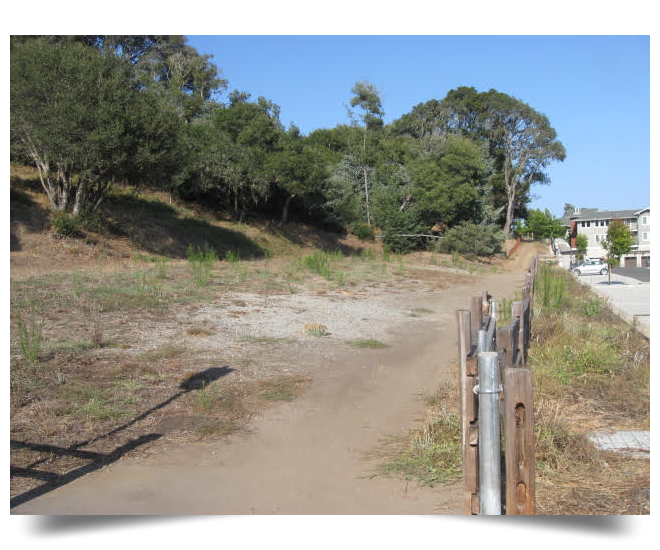
I was flipping through the book when I caught this place name out of the corner of my eye… “The Ruins”. What’s that? How could I not write about so evocative a name! Let’s see what we can find out about them!
Turns out, both a lot, and not much. This sounds like one of those local “word of mouth” places that gets very little formal notice. Being located on private property still owned by the descendants of Hiram Daniel Scott himself may also contribute to that. I found a couple of threads on Facebook and Reddit about them, abstracts of scientific papers by UCSC Prof. Hilde Schwartz, and a write up about it by UCSC student Paige Welsh for “Hilltoppers”, and that was about it.
These were a major tourist attraction, however, for the County in its early days, as mentioned in this 1897 Santa Cruz Sentinel article, linked to in Facebook post, “Scotts Valley Ruins: They Once Were Among the Objects of Interest in This County” (scroll down on the left to read it). The Facebook thread also mentions an 1877 article referencing a piece in the Santa Cruz Enterprise where “a prominent English Druid” claimed they were “the remains of an a Druid temple, probably erected by the Norsemen”.
Hilde Schwartz, a UCSC professor and geologist (she retired in 2023), wrote a paper about the site, “‘The Ruins’: Large cold seep sandstone chimneys in the upper Miocene Santa Margarita Sandstone, Scotts Valley, CA” (2012) (the website is transitioning, so this link may not work in the future, FYI), and did a presentation at a conference, LARGE, CALCITE-CEMENTED SANDSTONE ‘CHIMNEYS’ IN THE SANTA MARGARITA SANDSTONE, SCOTTS VALLEY, CALIFORNIA: CASE STUDY OF A PLUNDERED LATE MIOCENE COLD SEEP about them in 2014. I can’t find anything
In summary, the ‘Ruins’ “…represent an exhumed, localized seep field that included focused rising columns (chimneys) and diffusive flow (slabs) of methane-rich fluids through shallow marine sediments.” (Schwartz)
In that same year, a UCSC student, Paige Welsh, interviewed Schwartz and wrote a piece about the site for “BIOE188: Introduction to Science Writing”, later published on a local web site, “Hilltromper”. “The Geologist And The Case of The Scotts Valley Ruins” (link via Archive.Org’s WayBack Machine). The “Hilltromper” site is now offline, but the article is still indexed in Google and other search engines.
The “Ruins” were ransacked by Gold Rush era fortune hunters, unfortunately, so only traces remain of the original “Ruins”. Schwartz is quoted as saying that a substantial chunk of the site was hauled up to San Francisco, but no one knows where the pieces went. The article also mentioned that local historian Frank Perry was the person who pointed Schwartz to the site, a nice example of cross disciplinary synergy.
The link above is missing some photographs which, handily, are preserved in a 2016 Facebook post by the Scotts Valley Chamber of Commerce.
Possibly, I didn’t dig deeply enough to find more, but changing “Scotts Valley” to “Santa Cruz” creates a tremendous amount of noise, as “The Ruins” is semi-generic (there’s of course, a band that goes by that name) and Santa Cruz is also a fairly common place name.

One of the things that caught my attention was the copyright date for the quote from William Henry Brewer… 1930. For something that happened 66 years earlier! It turns out that, twenty years after his death in 1910 (he worked at Yale as a Professor of Agriculture for nearly 40 years subsequent to his California adventures), Yale University Press published a book, “Up and Down California in 1860-1864; The Journal of William H. Brewer” (link has the full text and images) containing the journals, notes, and letters from his five years in California working under Josiah Dwight Whitney, the first state geologist of California.
For those interested in the details of the geography underlying the site, the Santa Margarita Sandstone of late middle and early late Miocene age, I dug up this scanned copy of a 1984 USGS paper, “Late Miocene (Santa Margarita Sandstone) shallow marine clastics” by one R. Lawrence Phillips. Handwritten notes on this state that the author obtained his Ph. D. from UCSC in 1981, and that the area was the topic of his thesis.
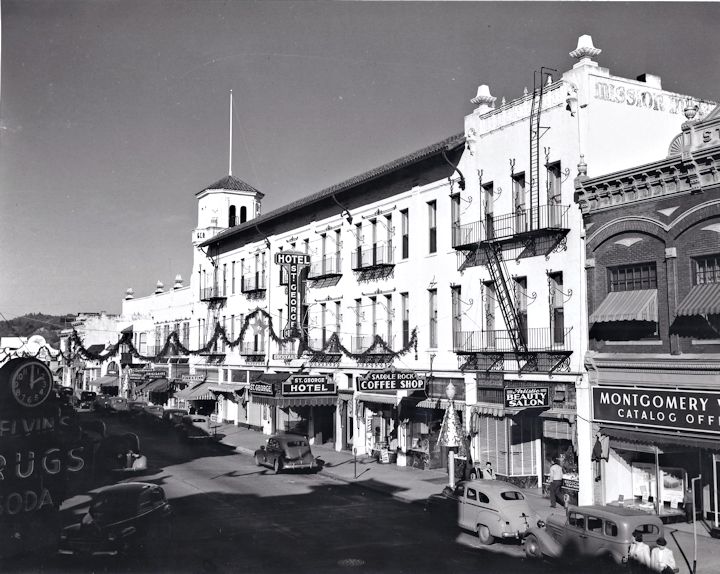
A series of sandstone formations Located in Scotts Valley that at one time caused quite a stir. They were described in 1909 by the geologists Branner, Newsom, and Arnold:
Certain grotesque concretionary columns, known locally as The Ruins occur in the white sand on the Locke place in Scott[s] Valley. The columns show a remarkable alignment, suggesting parallel walls of a house. They are the result of a weathering away of the soft sandstone surrounding locally hardened portions along joint cracks.
–Branner (1909, p.5)
But when they were “discovered” in the 1850s visions of an ancient city were conjured up. See for example, “Wonderful Discoveries of Ancient Ruins,” Daily Alta California, February 8, 1856:
It is conceded by all intelligent persons that this mighty structure…being anterior to the formation of the hills and mountains around it has withstood fire and flood… it is most obvious that no corresponding works of art can be found among the ruins of the modern world.
William Henry Brewer, the Yale University scientist who was Principal Assistant to Josiah Whitney for his geological survey of California (1864), described his visit to the Ruins:
Thursday we went to see some noted rocks called “The Ruins,” six or seven miles back in the mountains. We found them humbug—nothing near what we expected—some were outcrops of sand stone, which had weathered in curious forms, some were in tubes like chimneys two or three feet high. These had been regarded as artificial works—”chimneys of furnaces”—and at one time a company was actually formed to dig for treasures that might be buried there. So inflamed is the public mind here on hidden treasures!
–Brewer (1930)


|
Thomas Leavitt is the husbandy thing to our illustrious webmistress. A resident of Santa Cruz (now part time) since 1993, his interests include history, technology, and community organizing. He started the world’s first self-service web hosting company, WebCom, located at 903 Pacific in May of 1994. He’s been part of too many community organizations to mention, and ran for City Council in the early aughts. Email Thomas at ThomLeavitt@gmail.com |
 “Ennui”
“Between Ennui and Ecstasy unwinds our whole experience of time.”
~Emil Cioran
“L’extrême ennui sert à nous désennuyer.”
“Extreme boredom serves to relieve us from boredom.”
~François La Rochefoucauld
“Some men write their lives to save themselves from ennui, careless of the amount they inflict on their readers.”
~Charles Babbage
“The only horrible thing in the world is ennui.”
~Oscar Wilde
“To love to read is to exchange hours of ennui for hours of delight.”
~Montesquieu
|
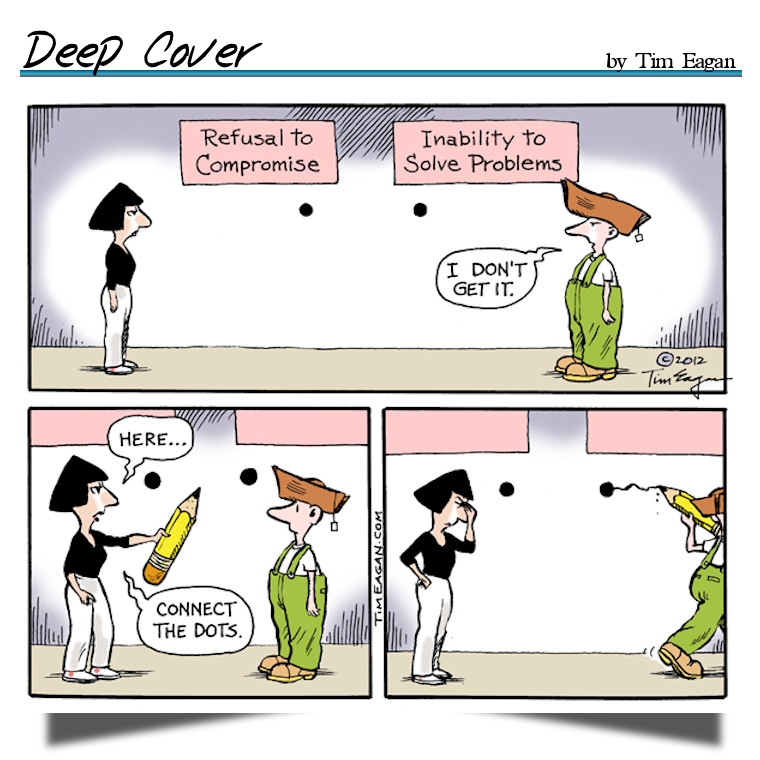
Solving the problem is often made easier by looking at it from an outsider’s perspective. Just sayin’ |
Direct questions and comments to webmistress@BrattonOnline.com
(Gunilla Leavitt)