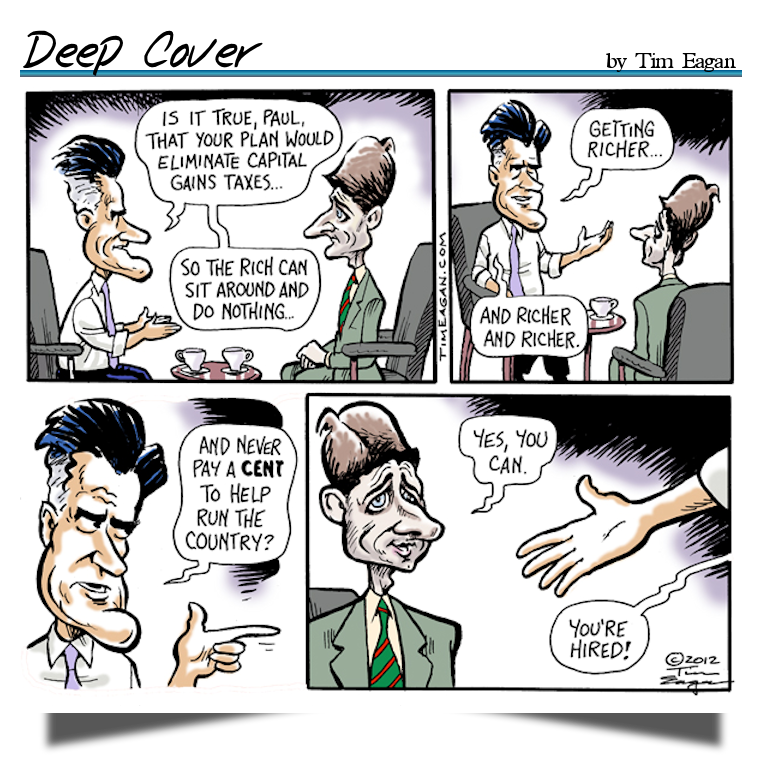
Greensite… on Coolidge Drive disaster… Steinbruner… soil at the county fairgrounds… learn about the October ballot… Hayes… Food: A Case for Conservation… Patton… I Can’t Help But Comment… Matlock… winning…scum…cotton candy… Eagan… Subconscious Comics and Deep Cover … Webmistress serves you… Rocky Horror Picture Show… Quotes on… “Summer’s End”

|
|
If you want to pitch in to
|

DECOMPRESSING. I’m back home in lovely Ben Lomond, settling back in to “normal”, whatever that means. Tomorrow – today by the time you read this – is the 2nd annual Scottish Day in Ben Lomond. It goes from 1:00 PM to 5:00 PM at Ben Lomond County Park, Mill Street, Ben Lomond. I know you’re getting this late, maybe even after it’s already over, and I’m sorry about that. However, if you don’t make it to Ben Lomond for Scottish Day, there’s a different event here on Sunday. Fika Bakeshop is doing a Popup Café from 11am – 3pm. The scones and the cardamom buns are to die for, and I highly recommend stopping by if you can. It’s at 261 Madrona Way, Ben Lomond.
See you when I see you! 🙂
~Webmistress
OBSESSION. Peacock. Movie. (7.8 IMDb) 
Obsession is less a “be careful what you wish for” story than a warning to be careful what someone else wishes about you. What begins as desire curdles into something far more complicated, until it becomes difficult to tell who is really the villain and who is simply the victim of a wish that has gone badly wrong. The result is a modest but effective little story about longing, control, and the danger of getting exactly what someone thinks they want. Definitely worth a watch.
~Sarge

KATLA. Netflix. Movie. (7 IMDb)
Katla is bleak in the best possible way, set beneath the ash-gray skies of a small Icelandic town, Vik, where everyone seems to have learned to survive by saying as little as possible. But when the volcano begins returning people who should not be there, it does more than produce doppelgangers; it drags old grief, guilt, resentment, and buried secrets out of lives already worn thin. What begins as a supernatural mystery gradually becomes something more unsettling, asking whether identity is really a matter of being the “original,” or whether the person who loves more deeply, suffers less damage, or makes better choices might have the stronger claim to that life. Quiet, strange, and relentlessly melancholy, Katla makes its frozen landscape feel like an extension of the people living in it: apparently still, but with something hot and dangerous moving underneath. Worth a watch.
~Sarge
THE LAST HOUSE. Netflix. Movie. (5.5 IMDb) 
Buñuel’s The Exterminating Angel meets Lovecraft.
This is the ultimate “bottle story.” A suburban Seattle family wakes up one morning to find they can’t leave their house – and neither can anyone else on the block, or maybe anywhere. Some kind of mostly unseen force has sealed everyone in, and it brings the rain with it. Endless, relentless rain.
Stories like this always get under my skin. There’s a very specific kind of tension that kicks in once it starts to feel like there’s no way out – I stop hoping for a clever escape and start just wanting these poor people put out of their misery. That’s not a knock on the film; it’s a testament to how well it builds dread. You feel the walls closing in right along with the family.
What makes it work is the slow unraveling – watching ordinary people get inventive out of sheer necessity, rationing food, rigging up ways to collect water, turning on each other and then back to each other again. It’s as much a study in psychological survival as physical survival. The monster stuff, when it finally shows up, feels almost like an afterthought bolted onto a much stranger, much better film about isolation and endurance – but even that tacked-on quality has a certain charm, like the movie couldn’t resist giving its dread a shape.
Worth a watch.
~Sarge
THE BACKROOMS. In theatres, PrimeTV. Movie. (6.8 IMDb)
The Backrooms, like Slenderman and Creepy Pasta, grew out of the internet, a new kind of horror born from the post-Covid emptying of once-populated spaces. The Backrooms are both a genre and a reaction to liminal spaces: those empty places between places. Abandoned terminals, shopping malls, office buildings. They can be fascinating, but also deeply unnerving.
The Backrooms movie takes that unease and turns it up to 12, suggesting these are places misremembering themselves: genuinely endless hallways, random fragments of stairs, windows where windows shouldn’t be. Even people become fragmented, misremembered.
For anyone who’s ever found themselves unnerved not by boogeymen, but by places that just aren’t right, this hits a very particular nerve. Well worth a watch
~Sarge
THE ODYSSEY. In Theaters. Movie. (8.5 IMDb) 
The “Helen is DEI casting!” and “Achilles is trans!” outrage tells me you looked up The Odyssey just long enough to be angry, without actually reading it or seeing the film. I’ve read it multiple times, from adolescence through university. It’s a legend Homer recorded centuries after the supposed events, preserved through oral tradition, and all the variations that adds to the story. Helen’s skin color has no significance to the story, and Achilles is already dead when The Odyssey begins. Elliot Page doesn’t play Achilles at all, but Sinon, the young man sent to war in another’s place.
Nolan’s Odyssey is a solid, faithful-ish telling, briskly told in about three hours (I know, that sounds like an oxymoron but it’s true). It adds some believable depth to Odysseus, gives Penelope less screen time than she deserves, and as a mythology geek I could nitpick the lack of spear fighting or the anachronistic Corinthian helmets instead of the Achaeans’ boar’s tusk helmets. But that’s fanboy trivia. At its heart, it’s a powerful story about responsibility and loss. Well worth a watch. Twice, if you can.
~Sarge
MASTERS OF THE UNIVERSE. PrimeTV. Movie. (6.8 IMDb)
Masters of the Universe (2026) was a genuine surprise. Rather than forcing the franchise into a dark, gritty reboot, it embraces the colorful, larger-than-life spirit of the original. It balances action, fantasy, and humor without winking at the audience, making the whole adventure feel sincere, fun, and delightfully goofy.
This isn’t trying to be the next great fantasy epic—it’s trying to be a Masters of the Universe movie, and it succeeds. Ignore the toxic nostalgia crowd complaining about the diverse casting of characters like Man-At-Arms, Triclops, and Ram Man, and you’ll find a tonally accurate adaptation that answers plenty of questions longtime fans have had for years (particularly namings). Stick around for the mid- and post-credit scenes. Well worth the watch.
~Sarge
|
Sarge, aka Jeffery Sargent, cut his teeth on the Golden Age of Hollywoood on TV and with regular trips to the Sash Mill. Film classes then, at Cabrillo with Morton Marcus, broadened his scope – he found he preferred Keaton over Chaplin, and Akira Kurosawa was his Yoda. Sarge spent 15 years working in Special Effects, on everything from Starship Troopers to Battlestar Galactica. He is a staunch geek who has a weak spot for Cozy Mysteries and loathes “Reality” shows. While he doesn’t care for the unrelenting banal horror of “True Crime”, he licks his lips over a twist like the end of Chinatown. Email Sarge at JeffLSargent@gmail.com |
September 14, 2026
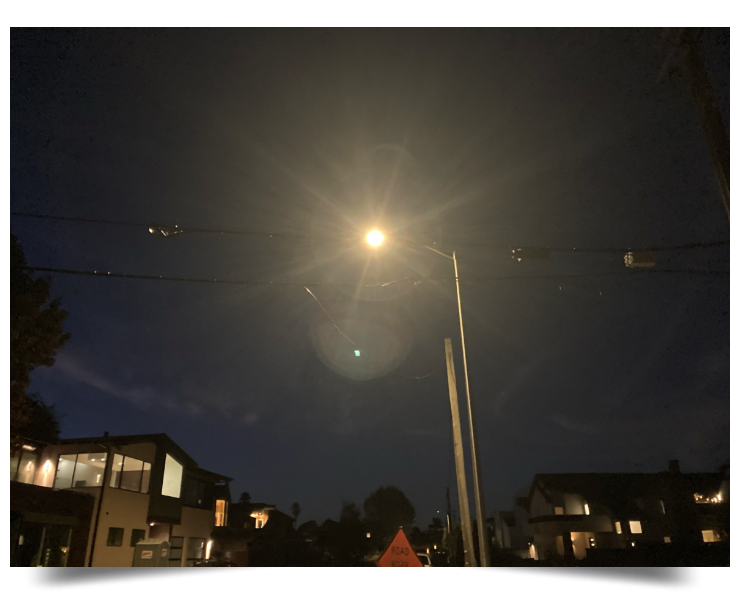
In a previous piece, I wrote about the two new streetlights the city has erected on Pelton Avenue, one adjacent to and the other opposite the Monarch Butterfly overwintering site in Lighthouse Field State Beach. There have never been streetlights at this sensitive habitat area, which besides being a butterfly overwintering site is also a bird habitat, including for nesting owls and migratory swallows that feed on insects which are also light affected.
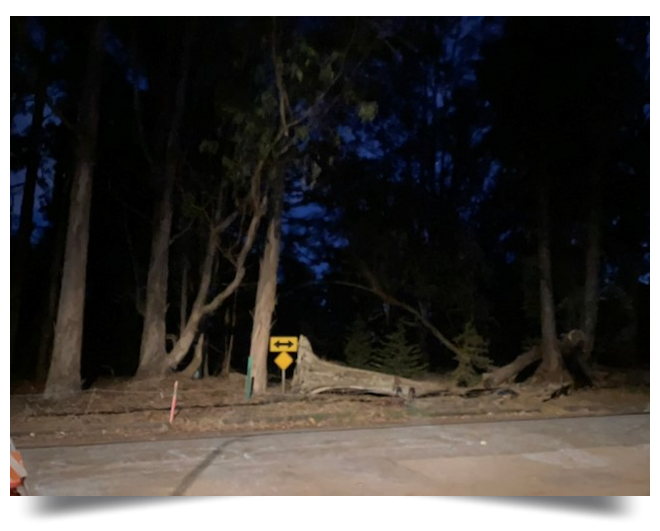
You can see the impacts from the light opposite the butterfly grove in the photos. Both were taken without flash. The one above is taken from the Monarch site looking across Pelton Avenue towards the light. The glare is obvious. The one below is taken from the other side of the light looking across Pelton into the butterfly grove and shows significant light trespass into the Monarch site. The Monarch overwintering season starts mid-October. These lights need to be turned off.
If the city feels the need to light the sidewalk on the Oblates side of Pelton, then low bollards lighting the path is a sufficient level of illumination.
The other issue of environmental concern this past week was one item on the CA Coastal Commission (CCC) agenda. I wrote about that agenda item two weeks ago. The city was asking the CCC to accept its Local Coastal Program Sensitive Habitat and Species Map update as a minor issue. Many thanks to those of you who took the time to write to the CCC. That was very heartening!
The CCC received eleven submissions protesting this “minor” update, including one from the Sierra Club and another from DarkSky Santa Cruz. The CCC staff report rejected them all, and added an addendum after they received the public comment to justify their position.
Even though the Sierra Club in its two-minute slide presentation demonstrated that the city’s so-called “updated” map of 2012 omits two significant monarch butterfly sites on the eastside of town that had been mapped by environmental consultants in 2024 for the Rail/Trail EIR, the CCC staff and all commissioners ignored that input and voted to approve the city’s “minor” amendment. Their explanation for doing so was doublespeak. A map, the CCC executive director claimed, is “just a snapshot in time.” Whatever that nonsense means, the one they approved is already out of date with regards to mapped monarch habitats, it redefines established monarch habitats as “potential” and erases from the map, all other sensitive species.
The other rationalization from the CCC executive director on why the map was not so important was that any proposed project in the Coastal Zone will be assessed for sensitive species at that time, and any species identified will be documented and protected. I found that reassurance disingenuous. The CCC and I both know that the city is planning to exempt any 100% affordable housing project in the Coastal Zone from requiring a Coastal Permit. If that passes city council vote, there will be no onsite study for sensitive species.
Rather than getting depressed that the City of Santa Cruz and the CA Coastal Commission seem to have abandoned concern for the natural environment, we need to double our efforts. It is becoming increasingly clear that environmentalism these days means accelerating human access to natural areas, not protecting them from human intrusion. That, and putting an economic value on the natural environment to find new ways to “activate” what is seen as “empty space.” Commodification in other words.
Please do take a moment to write to city council members and let them know what they should do with their new streetlights (well, avoid rudeness).
Here’s the list of all Santa Cruz City council members. I’m not suggesting what you write. Letters that read like the same script are not effective unless they number in the hundreds. Just a few lines based on what you see as the problem with lights shining into a monarch habitat. Many thanks!
City of Santa Cruz
- Fred Keeley, Mayor – fkeeley@santacruzca.gov
- Shebreh Kalantari-Johnson, Vice Mayor, District 3 – skalantari-johnson@santacruzca.gov
- Gabriela Trigueria, District 1 – gtrigueiro@santacruzca.gov
- Sonja Brunner, District 2 – sbrunner@santacruzca.gov
- Scott Newsome, District 4 – snewsome@santacruzca.gov
- Susie O’Hara, District 5 – sohara@santacruzca.gov
- Renee Golder, District 6 – rgolder@santacruzca.gov
| Gillian Greensite is a long time local activist, a member of Save Our Big Trees and the Santa Cruz chapter of IDA, International Dark Sky Association http://darksky.org Plus she’s an avid ocean swimmer, hiker and lover of all things wild. |
There are 14 State measures on the ballot this November. Gain some information about them on Saturday, October 3, at a special forum sponsored by the Santa Cruz Democratic Women’s Committee and NAACP when State Senator John Laird will speak about the history and background of State measures, and how each might affect our Community and others throughout the state.
Free and open to all members of the Public! October 3, 10am – noon at Colligan Theatre at Tanner Arts Center, 1010 River Street, Santa Crux.
PROTECT THE COUNTY’S ONLY AIRPORT
Thanks to the Watsonville Pilots Association, the City of Watsonville must throttle back on allowing a large hotel and other development to happen near the airport. Some may argue that the airport is used only by the wealthy but in fact, it serves as the lifeline for our County in times of disasters. During the 1989 Loma Prieta Earthquake, pilots brought emergency medical supplies came to our then-isolated County.
Some reading on the topic:
- Fallout from Watsonville airport land use dispute throws hotel, shopping center into jeopardy – Santa Cruz Local
- Watsonville, California’s Planning Commission Narrowly OKs Hotel on Technology Drive
- 375 Technology Drive – Hotel Project
COUNTY BOARD OF SUPERVISORS GIVES AWAY LOCAL CONTROL
At a time when the County Board of Supervisors wring their hands and lament the State has taken over, it was shocking to hear all but one Supervisor argue that the County should give up local control and oversight of the 68 small water systems here. Only Supervisor DeSerpa sided with the many owners and managers of the small water systems she had heard from in the second district.
The County’s own Water Advisory Commission conducted a survey of the small water system leaders and determined that all of those who responded wanted to remain under local oversight, and were willing to pay higher fees to keep from being turned over to the State.
But never mind, said the Environmental Health presenter, Sierra Ryan, the costs are just too great. Her Department had a grant to cover the cost of 1.3 full time staff to manage the monthly bacterial test reports and annual water quality tests that these small water company owners and managers must do, but the grant money ran out in 2021. Since then, the Department has run short of funding by as much as $160,000, even though the annual fees the small water systems pay have risen 4%-10% every year since.
Even though speakers pointed out that the State Water Board was responsible for oversight of the Big Basin Water Company , causing it to go under legal conservatorship, the local County staff were the ones who stepped in to be the heroes when the system was failing.
The State Water Board’s clear mission is to consolidate small water systems, whether they want to or not. Like the many unfunded mandates handed down by the legislature for increased and onerous reporting, the State would mandate consolidation but provide no monetary support to make it happen.
I can attest to that, having researched the cost of annexing the small water system that now provides excellent drinking water but did not under former ownership in the 1990’s. Soquel Creek Water District would have required $35,000-$50,000 per household to upgrade the system’s infrastructure. The cost now would be even higher.
Later, I saw Supervisor Martinez and asked why the Board was not willing to give the small water system folks another year to work with staff and determine a way to cover the cost to keep local control. She basically shrugged and said, “Well, they’ve been working on it for a year.”
Ms. Ryan assured the Board that if there are problems with the State’s oversight, the County can petition to regain local control. I would guess that the County will not accept the responsibility again.
Watch this discussion here, Item #7 on the regular agenda: (click on that item to go directly to that discussion)
DON’T WORRY, BE HAPPY
Supervisor Justin Cummings tried to convince the Board last Tuesday that putting an initiative on the 2028 ballot to allow County voters to consider mandating any data or AI center permit in the County be voter-approved. Three of the five Supervisors rejected that, claiming there is nothing to worry about now, so why take preemptive action?
Supervisor Cummings cited what other communities have done, either with moratoriums or ballot initiatives. Data Center Monterey Park Ban
He pointed to the need for proactive action to give residents a chance to at least vote on this matter, and not be caught off guard by large data center projects wanting to move in here, such as is happening nearby: Big Tech’s data center boom is igniting a political revolt in the Bay Area
One would think they would understand the importance of this forward-thinking action, evidenced by Measure A, passed by voters in 1984 to require any proposed local facilities supporting offshore oil drilling to be voted on by the public. That action is now being expanded to our November 3, 2026 ballot with Measure D to issue the same protections for offshore seabed mining operations.
Supervisor Koenig said he did not see any reason to worry now, and that any such project could be examined by the Board of Supervisors. He also said such projects could be a financial benefit to the County, when cash is hard to come by.
Supervisor Martinez felt this was just too early, that state lawmakers will likely handle it, and “this is a thing right now” but we need not worry here.
Wow.
Supervisor Cummings argued that the Cemex Plant is a prime candidate for a large data center to move in, and he did not want residents to be taken by surprise by having one get approved without notice. This is happening in adjacent counties. Only Supervisor Hernandez agreed…his district has the large Seahawk battery energy storage system (BESS) project stomping on local citizens’ protests.
Watch this shocking discussion here: the last item on the regular agenda, #11
THE LIVESTOCK BARNS ARE GONE
After years of wanting to do so, the Santa Cruz County Fair Board authorized the historic livestock barns to be demolished. It was done quickly, even though there were protected bat populations roosting in the rafters.
The barns are now gone. The tents are up, just in time for the Fair to open this week.

When the Fair is over, the tents will go away. Where will our County residents with livestock go for emergency shelter in the next disaster? Hmmmm…..
The County’s Office of Response, Recovery and Resilience (aka OR3) is applying for a $10 Million grant to make the fairgrounds a local Resiliency Center. No one quite seems to know what that would mean, but OR3 staff assures it would be used in part to upgrade existing infrastructure at the fairgrounds.
When I asked about why the County brought in only packaged food for the CZU Fire victims sheltering at the fairgrounds in 2020 when there are good industrial kitchens at the site, the OR3 staff said those kitchens are not “up to par”, but that this resiliency grant could be used to address that.
Hmmm…
Will the barns ever be rebuilt? Write the Santa Cruz County Fairgrounds Board and ask.
Maybe they can also explain how those roosting bats were “relocated” when the livestock barns were quickly demolished during the active and protected time of year for the bats.
WRITE ONE LETTER. MAKE ONE CALL. GO TO THE FAIR THIS WEEK AND HAVE FUN.
DO ONE THING THIS WEEK AND MAKE A BIG DIFFERENCE.
Cheers,
Becky
|
Becky Steinbruner is a 30+ year resident of Aptos. She has fought for water, fire, emergency preparedness, and for road repair. She ran for Second District County Supervisor in 2016 on a shoestring and got nearly 20% of the votes. She ran again in 2020 on a slightly bigger shoestring and got 1/3 of the votes.
Email Becky at KI6TKB@yahoo.com |
The Rationale for the Dumbing Down
By the sheer number of people and organizations dedicated to education about the environment, one would think Californians would be supremely eco-literate and therefore intelligent citizens in their actions and their voting. But, does Nature in California tangibly benefit from such education? What are the barriers to environmental education doing better at creating a culture of stewardship? These are important questions and I have started hearing some hypotheses that I want to share.
There are around 600 environmental education groups in California. California State Parks and the California Department of Fish and Wildlife have a class of employees called ‘interpreter’ whose role is environmental education. In addition, there are staff with 30 museums dedicated to natural history across the State. One would assume that with these numbers, there would be an immense, measurable, or at least palpable impact on the populace. State Parks alone reaches 70 million visitors each year, but how do those visits translate to improved knowledge about the environment or, better yet, improved behavior towards ecological conservation?
At the same time all of this education has been going on, California’s habitats and species have been declining precipitously. Since 1982, the state has lost 55,000 acres of habitat each year, the area of about two San Franciscos. Overall, species are becoming rarer and endangered species are slipping closer to disappearing. Twenty-one animal species have been driven extinct in California in recent decades. 17 have disappeared from the state but are surviving elsewhere. Sixty four percent of California’s fish species are at risk of extinction with little progress in the positive direction. I have been asking my colleagues why the impact of environmental education is not being seen in these grim statistics and their answers are shocking.
Stupid Public!
“The public is too stupid” is a common excuse for lack of environmental education impact. I have heard this directly from high level State agency personnel and lower-level educational staff alike. I hear this regularly from ‘environmentalists,’ too. This attitude is why you see signs in parks written for those with no more than a 6th grade reading comprehension level. And, this could be the reason that there is so little interpretation about habitat and species protection.
Here’s a 6th grade message from the brochure about the sandhills habitat at Henry Cowell State Park:
“The wrentit’s lilting song and the scrub jay’s screeching calls fill the air in the sandhill chaparral ecosystem. Two rare endemic insect species, the endangered Zayante band-winged grasshopper and the Mount Hermon June beetle, inhabit this area of the park.”
Here’s what it might better say:
“90% of the inland sandhills of Santa Cruz County have been destroyed by mining and residential development, but one of the last remaining remnants are in the park hosting one of two remaining populations of the Santa Cruz kangaroo rat. We have closed that area of the park to protect that and other endangered species. People trespassing in those areas threaten the survival of those species.”
It is well accepted that people act as you treat them. Treat them as adults, they act as adults. Treat them with respect, they act in respectful ways. Treat them as if they are stupid and, guess what, they act stupid.
Conflict Aversion
The other reason I’ve heard about environmental education organizations not doing a better job of educating Californians is the concern about making enemies. The example someone shared with me was about setting aside parkland versus advocating for its good stewardship. The person I was speaking with said that their “environmentalist” colleagues are happy to support purchasing land and setting it aside for protection but they feel very differently about being involved with the conservation issues after an area becomes a park. They fear that managing parks for wildlife conservation will create rancor from limiting access in favor of resource protection and they don’t want to “make enemies.” Having been part of an experimental ‘advisory group’ for one State Park on how to manage recreation versus conservation, I well understand this fear. It was not pleasant.
Real World Nastiness
When Gray Whale Ranch became part of Wilder Ranch State Park, State Parks convened the Gray Whale Advisory Committee made up of various interest groups to advise on balancing natural resource conservation and recreational access. The process suffered from conflicts of interest and lack of skilled facilitation and resulted in nothing more than a lot of wasted time. Primarily, it was evident that State Parks personnel involved in organizing and facilitating the group were more philosophically aligned with the mountain biking contingent of the Committee. Instead of approaching the process neutrally and with open minds, parks personnel worked with the bikers to create an extensive map of potential trails in advance of the first Committee meeting, creating a situation where the conservation contingent was set into a reactionary stance. Professionals would have facilitated using different processes, with a collaborative approach which would have seen areas of the park designated as natural preserves and where trails would have been better designed to avoid erosion and user conflict. The dysfunction of that process further divided the community and State Parks has never attempted a more collaborative planning approach since.
We could really use some forward-acting collaborations for managing park lands for both conservation and access, but that is unlikely to occur in the current climate of conservation group leadership/efficacy and mountain biking group ‘wins.’
|
Grey Hayes is a fervent speaker for all things wild, and his occupations have included land stewardship with UC Natural Reserves, large-scale monitoring and strategic planning with The Nature Conservancy, professional education with the Elkhorn Slough National Estuarine Research Reserve, and teaching undergraduates at UC Santa Cruz. Visit his website at: www.greyhayes.net
Email Grey at coastalprairie@aol.com |
Dateline: September 15, 2026

On July 10, 2026, The New York Times let readers know that a heat wave in France, at the end of June, has killed millions of chickens. Another story, in the same edition of the paper, announced that “Warming Could Ravage Amazon’s Useful Plants.”
The chicken death story was Page One, and continued over to Page A6. The story on the danger that global warming is posing to useful plants from the Amazon was also on Page A6. Three stories, on Page A7, extended the overall message, that global warming is a “real thing,” and is having real, massively adverse, impacts: (1) “‘Worrying Situation’ As Glaciers Of Alps Melt Faster.” (2) “Some Deep-Sea Creatures Benefit As Planet Warms.” (3) “Europe’s Extreme Weather Spurs Marine Heat Wave.”
These global warming stories in The Times – or maybe I should call them Global WARNING Stories – follow up on The New Yorker story I wrote about in my blog posting on July 16th. That blog posting, in case you either missed it or have already forgotten it, outlined the dangers that global warming is posing to human life by way of the growth and mutation of microbes.
I am, you might conclude, somewhat hung up on the dangers posed by global warming. It’s true! I am! Perhaps the recent advent of really hot weather, here in my home town of Santa Cruz, California (the temperature hit 105 degrees on last Wednesday, I am reliably informed), can get locals motivated, if they aren’t already.
I would like to think that a new Congress, taking office after the so-called “Midterm” elections this November, will promptly focus in on what needs to become a national priority – namely, our need to develop and fund programs to cut our carbon emissions drastically, and to prepare for the impacts that have already become obvious, and that have started to monopolize our news. Our current president, though, is leading his administration in the opposite direction (I am citing to a story in today’s Wall Street Journal). Just in case you haven’t figured this out, our current president seems to think that global warming is a “scam,” despite those millions of dead chickens.
|
Gary Patton is a former Santa Cruz County Supervisor (20 years) and an attorney for individuals and community groups on land use and environmental issues. The opinions expressed are Mr. Patton’s. You can read and subscribe to his daily blog at www.gapatton.net
Email Gary at gapatton@mac.com |
SOUTH CANADA, PRE-NUP, ART OF THE DEAL
“I’ll take BRIBE for $5,000, Alex,” say at least 35% of those on the voter rolls. President Trump’s dividend promised to every adult American, called the “Trump Dividend,” if the midterm elections result in House and Senate majorities for the GOP has been a reasonably hot topic in some news outlets following his Midterm Convention promise in Dallas. However, for the most part it resulted in a ‘ho-hum’ response, being seen as just more Trumpian hot air to Americans who have become immune to his antics. Of course, nobody will get a dime, regardless of their balloting, and as critics have pointed out such a bribe would cost the treasury around $1.3 trillion. Incidentally, those same critics jumped on the news that ‘holiday’ cash gifts of $45,000 each were given to Natalie Harp, Margo Martin, and a couple of other aides — his money or OUR money? As The Swamp on Substack posted, “No, it’s not a shakedown. Vote GOP, and we give you money. Mob bosses do that, too.”
VP Vance defined the ‘bribe’ on Fox News as a “dividend for American workers” to be funded by tariff revenue. “We’re taking in an extraordinary amount of revenue because the president of the United States is actually standing up to both foreign companies but also foreign countries who have been taking advantage of America’s workers for pretty much my entire life,” Vance explained. Marc Short, board chair of former VP Mike Pence’s think tank, Advancing American Freedom, said, “The president is a performer and having the pageantry of the convention [in Dallas], he’s going to throw out something,” — a “departure from Trump’s pledge of fiscal responsibility and conservative economics.” Former US Representative Marjorie Taylor Greene’s snide remarks echoed those of many others: “$5,000 for the peasants will be in the mail after the election only if you vote Republican, along with those DOGE [$5,000] and tariff [$2,000] money checks.” Afterwards, Trump dared to propose yet another $500 rebate for nearly a million people he claims were “wrongly overcharged” under Obamacare. The president’s promises of cash payments in the past have never materialized, and we have to remember him once bragging that he could be the “best communist” in history because all he’d have to do is promise people free stuff and then never deliver.
A post on The Onion: “Trump promises to take $5,000 from every American if Democrats win midterms.” Isn’t he doing that already? And, leave it to Andy Borowitz to address the pie-in-the-sky dividend: “Calling it an effort to ‘restore sanity,’ on Thursday Canadian Prime Minister Mark Carney offered every adult American $6,000 to vote against Republicans in the midterms. ‘If you oust the Republicans, you’ll receive a check for $6,000,’ he said at a press conference. ‘And to be clear, we’re talking American dollars, not Canadian.’ The prime minister’s announcement seemed unlikely to make Donald Trump increase his own offer, since $5,000 would be the most he has ever paid to a non-pornstar. Carney concluded his press conference by unveiling a new map of North America with the United States renamed ‘South Canada.‘”
Trump’s Dallas Midterms Convention will be remembered as an early Halloween celebration for its rows and rows of attendees dressed as empty auditorium seats, which didn’t fool the Orange King by a long shot. He announced on social media, a full house, packed to the rafters, breaking attendance records with crowds waiting outside, and beating the NFL in tv ratings. House Speaker Johnson told NewsMax’s Finnerty the arena was full, even as the cameras panned the interior to video the Halloween celebrants. Not fooling around, Liz Landers of PBS News posted a video of the half-full 20,000-seat basketball arena, and former Democratic staffer Aaron Fritschner posted on X, “Capacity-wise they could have held this in a high school gym.” Several pundits observed that the hot Texas sun may have discouraged many who had waited in a long entry line, with many needing medical attention from EMTs. The number of empty seats must have made the convention organizers realize that a bullet was dodged in not being able to book the Dallas Cowboys‘ 80,000-seat football stadium as Trump had proposed initially.
Daily Dose of Democracy posted on its site: “America’s wannabe dictator took center stage and forced the lemmings in attendance to pledge allegiance to ‘the greatest president in the history of the United States’ while also promising to ‘cheat like hell’ to make sure Republicans don’t lose in November. Uh, okay. Any Republicans who were hoping this week’s ‘midterm convention’ would somehow be more than a gratuitous spectacle of sycophants worshipping at the altar of their god-king just got an answer.” Trump raised his right hand, asking the attendees to do likewise, as he led them in a mock version of the Pledge of Allegiance, to pledge “if I am registered or not, I am going to cheat like hell like they [Democrats] do.” “You know what happens if you don’t vote? You go to hell, you know that? Okay? And I don’t want that to happen to you, so please go vote,” the president concluded. VP Vance supposedly was given the biggest speaking slot on the last night of the convention, attempting to give a keynote address to bolster his 2028 presidential aspirations. He followed Trump’s speech and managed to give a 40-minute oration before Trump again took his microphone, spewing his inanities, and insuring that the cameras focused on him. “We’ve got to take care of business this November, then we’ll worry about what comes next,” said Vance the greeter, standing at the gates of hell.
“I just love that we have an administration that treats the American voter like one of his [Trump’s] ex-wives. ‘How much money to make you happy? There you go.’ Like, I don’t think it’s wise,” comedian Roy Wood, formerly of The Daily Show remarked on CNN. The show’s anchor, John Berman joked, “You think that voters should get to spin a prenup with presidents?” Wood is now host of CNN’s American adaptation of the news and entertainment panel show, Have I Got News For You. Likening Trump to a surly divorcee who confuses his constituents with his marriages, Wood suggested how the prez could improve his outlandish bribe of $5,000 for voting in the Republican column. “I’m waiting on my money, so why not just give us half the money up front? Ain’t that the art of the deal?”
The Swamp on Substack says it’s never a good sign when the vendors offer cut-price merchandise before the headliner has left the building, and especially when the event wasn’t sold out as claimed. Sell-out Republicans have finally seen the writing on the wall, so they avoided the president’s self-promoted adulation fest, or quickly headed for the exits in the hopes of salvaging their political careers by Election Day. As for the swag vendors, t-shirts were half price on the second day of the convention, although a shirt featuring a younger Trump as a Marlboro Man, astride a spirited horse sold out on the first day — $47 a pop! Food vendors were selling stale hot dogs along with a syrup enhanced cola for $25, with a small pre-packaged salad for only $12 extra. No complaints about ‘affordability’ here. Of course, the real eating, drinking and money-raising action was taking place in the private dining rooms and hotel suites for the GOP powerbrokers.
House Majority Leader Steve Scalise reportedly was headliner at one of the week’s more fascinating fundraisers at the Highland Park home of billionaire mega donor, Harlan Crow, well-known for his buddying with certain Supreme Court justices. For the privilege of seeing Scalise host a fireside chat in Crow’s digs, guests ponied up $10,000 to $100,000, the side attractions being Crow’s library of thousands of rare books and manuscripts — not to mention the sculpture garden known as ‘The Garden of Evil‘ which is graced with statues of Vladimir Lenin, Joseph Stalin, Fidel Castro, Mao Zedong, and others. Nothing says Republican fundraising like a garden full of dead dictators. So while the convention floor at the American Airlines Center offered an excess of Trump’s presence, the real business of Trump-a-palooza was happening elsewhere in Dallas, along with ‘affordable’ cover charges.
Travis Gettys writes on Raw Story, “President Donald Trump seems to want to drag the United States down with him once he shuffles off this mortal coil, according to historian Alan Elrod.” Dark warnings were in evidence at last week’s Trump-a-palooza regarding the nation’s future if Republicans lose in the November midterms, with Trump encouraging his followers to cheat or risk hellfire, observes Elrod, a politics and history professor, in his column for Liberal Currents. “Trump’s speech came off more like a sermon [a la Jim Jones] from Jonestown. My own overriding thought was: ‘This speech was like some sort of performance art piece of a live entombing of a mad king and his most loyal followers.‘” Trump is constantly referencing legacy issues like the ballroom, the border wall, and global tariffs, while teasing a campaign for an unconstitutional third term in office, and as Elrod notes, his lavish praise for some women who had attended more than 200 of his rallies is reminiscent of the ancient Egyptian practice of ‘retainer sacrifice.’
Elrod references his colleague, Samantha Hancox-Li, who has a simple theory about Trump’s self-promotion and obsession with legacy and slapping his name on buildings and projects: fear of death. Hancox-Li says, “My current theory of Donald Trump is that he is utterly gripped by the terror of death, and is desperately attempting to leave some mark on the world that history cannot erase — the point of his wars, the annexation threats, the DC vandalism. I think right now he is genuinely fixated on adding new American territory as the brass ring, the thing they’ll never be able to take away from his memory.” Elrod is in agreement, saying, “It’s a macabre but convincing psychological assessment. Rather than making America great again, Trump is inflicting grievous harm on it with tariffs, now upgraded to import bans against select Canadian goods; an illegal war; and a total ransacking of our public and private sectors for the enrichment of his courtiers and his family. And he is going to bury us all with him in a tomb of his own design — a ballroom.”
Trump’s ranting about the impenetrable ballroom project which will hold up to 2,000 people caused Elrod’s thoughts to become dismal. “These are the ramblings of a neurotic, dangerous madman. If Trump is taking America down, if he is going to bury this country, all the good in it and all its prosperity and potential, then he wants his most adoring and loyal retainers with him. He wants his cult locked inside.” Trump die-hards are optimistic about the midterms — to a degree. “It’s going to be fantastic,” insists Melissa Cole from Oklahoma, as she donned a gold sequined MAGA jacket at the Trump-a-palooza. “It has to be fantastic…we’re in a war between good and evil.” Grape or cherry Kool-Ade?
In an essay in The New Republic, former federal appeals court judge Michael Luttig argues that even if Democrats win decisively in the midterms there’s no guarantee the winners will be seated. Yikes! The ghost of Mitch McConnell arises with memories of President Obama’s nomination of Judge Merrick Garland to the Supreme Court, and the Senate leader’s refusal to hold hearings! Judge Luttig sees a constitutional crisis in the making for January 3, 2027, the date that the 120th Congress should be sworn in, with procedures being disrupted by Speaker Mike Johnson as he fires constitutionalist House Clerk Kevin McCumber, a Republican who goes by the book. Johnson could then install a Trump loyalist who will then leave Democratic members-elect off the roll that determines who gets to organize the new Congress. “From there, it’s writs of mandamus, emergency appeals and weeks or months of a country without a functioning House while the Supreme Court decides whether America is still a democracy,” says Luttig.
Luttig, a Supreme Court ‘finalist’ who lost out to a corrupt and arrogant Samuel Alito, points out Trump’s whining about rigged elections — with Republican acquiescence — and the harping about “nationalizing the voting” to achieve “election integrity” as MAGA blames Democrats and voting non-citizens for widespread fraud that is unproven and discounted with only insignificant occurrences. The Constitution is clear in Luttig’s estimation — that the House cannot refuse to seat anyone who has won a free and fair election on a flimsy pretext, yet he looks askance at a Supreme Court which handed Trump immunity and dodged the Fourteenth Amendment question. Luttig encourages Republicans not to go along with the deviousness, but is not optimistic. The judge writes, “The writing is already on the wall.” And as John Byrne posts on Raw America about that comment, “It’s been there since 2021. Some people just refuse to read it.”
That writing on the wall began on January 6, 2021, and as Steve Schmidt writes on The Warning, “That day was a crime of immense magnitude. The failure of Joe Biden, Kamala Harris, Merrick Garland and a few hundred political appointees to defend the republic and demand justice on behalf of the American people was a sin. The bill is coming due and soon. Judge Luttig sees it clearly. He has picked January 3rd as the day America dies. Judge Luttig has called his shot. Shouldn’t we speak about this out loud? Or is it already too late? Is there already too much fear to say out loud what could happen? Are we already consigned to whispers? What happens on January 4 when the winners of elections have been declared cheaters, criminals and liars?” Schmidt reminds us that everything is in motion, not a Hollywood movie or a Trump fever dream, and when we consider the unimaginable, we should think about it completely. “After all, delusion is a MAGA trait, not an American one,” he concludes.
|
Dale Matlock, a Santa Cruz County resident since 1968, is the former owner of The Print Gallery, a screenprinting establishment. He is an adherent of The George Vermosky school of journalism, and a follower of too many news shows, newspapers, and political publications, and a some-time resident of Moloka’i, Hawaii, U.S.A., serving on the Board of Directors of Kepuhi Beach Resort. Email: cornerspot14@yahoo.com. |
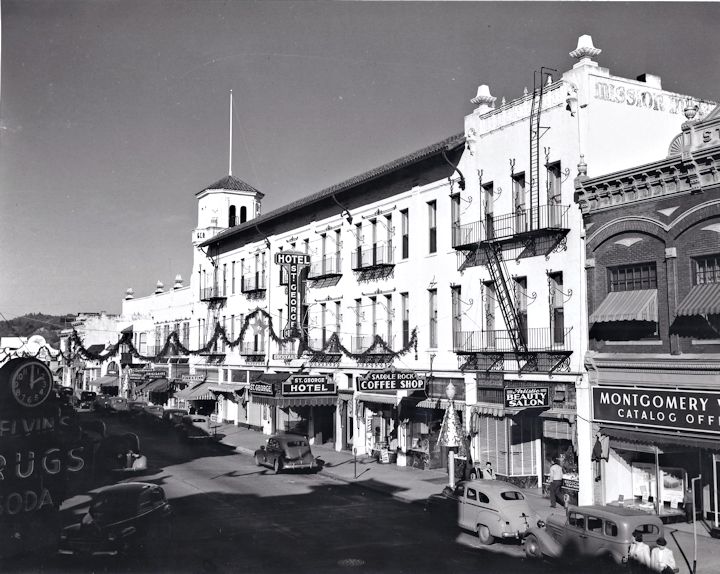
Each week, I will feature a selection of interesting and historically significant places in Santa Cruz County from the 1986 edition of Donald Thomas Clark‘s wonderful book, “Santa Cruz County Place Names: A Geographical Dictionary“, published by the Santa Cruz Historical Trust.
“Nuggets” If I find something topically relevant, but not necessarily directly related to the week’s selection, you’ll see it under the Nuggets heading. Note: for reasons of brevity, sources are usually dropped when I reproduce an entry. You can always email me if you’re curious, or, even better, buy a copy of the book!
Dateline: September 17, 2026
This week, I’m featuring two entries on the theme of huckleberries (of which there are “two major varieties” found in the Santa Cruz Mountains, as per Thomas (1961, p. 268).) The citation is from the first entry on page 162 of Clark’s book, which is entirely devoted to places named after the berry in Santa Cruz County: Huckleberry Cove, Huckleberry Creek, Huckleberry Campground (in Big Basin State Park), Huckleberry Flat, and Huckleberry Camp. The campground and camp both get their name from the Flat. Interestingly, none of these have any relationship to Mark Twain’s famous character, Huckleberry Finn.
One of the things that caught my eye, other than the number of entries using the term, was the term “bark hauler”. An entire job where people did nothing but haul tree bark? Apparently so. …and camping in the open as described below was apparently standard practice, too. According to this history of Bark Camp Meadow in Maine:
The process of peeling, yarding and hauling the bark to the factories is described in Appendix I of A History of Tanning in the State of Maine by Archibald Riley. This report was for a Masters Degree in Economics, but the Appendix is entirely about woods work and how the men lived in temporary shelters during the peeling season from the full moon in May to the full moon in August. All work was done in warm weather using temporary rough board camps or tents. This operation did not require the permanent buildings needed for logging in the winter in Maine.
[…]
A bark hauler, that is, a man and team of two horses, ordinarily received from thirty five to forty dollars a month and board. In 1935, when the Riley report was written, wages for the men averaged about $20 dollars per month and board.
I love the rabbit hole effect of this book, where one reference leads to a flood of information on an entirely unrelated topic. As a kid, one of my autistic habits was reading the dictionary and encyclopedia, and following the references from one entry to another, to another. Of course the web makes that infinitely easier (although sometimes it takes a bit of digital jujitsu to filter out the noise, in this case, a flood of entries related to a company called “C&J Bark Hauler LLC”).
The Island entry is interesting in that respect for the reference to the creator of the Loganberry, James Harvey Logan. Looking at the linked Wikipedia entry, I discovered that Logan lived in Santa Cruz! Not only that, he also built the Brookdale Lodge. He epitomizes the longstanding nature of Santa Cruz’s twin economic engines, agriculture and tourism.
Meadows (1950, p.8) records that in 1879 Natt Day had a tan bark camp “on a hillside about a quarter mile north of the present [Big Basin Redwoods State] Park headquarters,” and that one Mello worked for Day as a bark hauler and while doing so camped at “Huckleberry Flat,” later the site of the Girl Scout Camp, Huckleberry Woods. Named for the woody evergreen shrub, huckle-berry, which grows “profusely near headquarters in…Big Basin State Park…” according to Cooney-Lazaneo and Lyons, authors of Plants of Big Basin Redwoods State Park, (1981, p.88).
Don Waters, in telling of the changes in the Park from the time he first knew
it in 1926, wrote:The principal park activities of the late ’20s and early ’30s were hiking, picnicking, meandering among the huge trees, picking huckleberries and watching Fred Canham call the deer to dinner in the early evening…..–Santa Cruz Express, September 15, 1985, p.16.
An island that isn’t an island, but an area more properly described as a peninsula, in San Lorenzo Valley.
The island, which is really a small peninsula surrounded by a tight horse-shoe bend in the [San Lorenzo] river, is thought to have been named by Judge H. Logan. Logan, as you may know, is best remembered for crossing raspberries and blackberries creating the loganberry which today bears his name. It is thought he might have named the island while investigating its plentiful huckleberry crop–which has survived to this day.–Ammon-Wheeler (1984, p.21).
When the railroad reached San Lorenzo Valley, Huckleberry Island became the summer residence of several prominent East Bay families including the De Havens and the H. C. Capwells. It was recorded as a subdivision on April 23, 1903.



|
Thomas Leavitt is the husbandy thing to our illustrious webmistress. A resident of Santa Cruz (now part time) since 1993, his interests include history, technology, and community organizing. He started the world’s first self-service web hosting company, WebCom, located at 903 Pacific in May of 1994. He’s been part of too many community organizations to mention, and ran for City Council in the early aughts. Email Thomas at ThomLeavitt@gmail.com |
 “Careers”
“I have frequently been questioned, especially by women, of how I could reconcile family life with a scientific career. Well, it has not been easy.”
~Marie Curie
“Politics should not be a lifelong career, and elected officials should not be allowed to fix themselves in the halls of power of a nation.”
~Pierre Poilievre
“A career is wonderful, but you can’t curl up with it on a cold night.”
~Marilyn Monroe
“He knows nothing and thinks he knows everything. That points clearly to a political career.”
~George Bernard Shaw
“I really believe that what I do as an actress is my God-given talent. This is my calling, not my career.”
~Angela Bassett
|
love this 🙂 |
Direct questions and comments to webmistress@BrattonOnline.com
(Gunilla Leavitt)