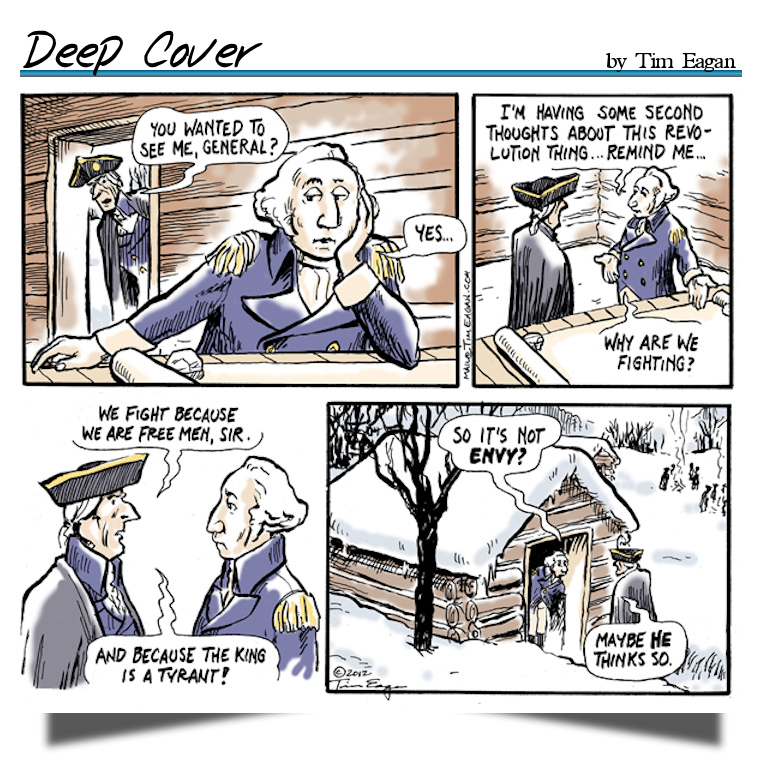
Greensite… on Important Tree Appeal on December 9… Steinbruner… Dec 5 last day for public comment on water… Hayes… Humans, Dogs, and Social Nature Patton… Some Recent Correspondence Matlock… permanent pause… project hate… detonation… Eagan… Subconscious Comics and Deep Cover … Webmistress serves you… the ubiquitous “Algorithm”… Thomas gives you… Place Name of the Week… Quotes on… “West Coast”

|
|
If you want to pitch in to
|

IT VARIES… Sometimes people ask me how long it takes me to put the column together, after I get sent the pieces from our intrepid contributors. All I can say is, “it varies”. There are days where I can get it out in 2 – 3 hours, and then there are time where I’ve worked on it all evening, and it’s 3am before I get the post up. Like today, lol!
I’m excited about our new feature, Santa Cruz Place Name of the Week. You’ll find it towards the bottom of the column – please do let me know what you think! You can email me at webmistress@BrattonOnline.com
With that, I’ll get out of the way. Enjoy this week’s pieces, and we’ll see you next week!
~Webmistress
MY NEXT GUEST NEEDS NO INTRODUCTION WITH DAVID LETTERMAN. Netflix. Series. (7.8 IMDb) 
If you’ve missed David Letterman since he left late night, he hasn’t gone far: he’s simply changed channels. My Next Guest Needs No Introduction on Netflix gives us Dave unfiltered, freed from network guardrails and sitting down for deep, intimate conversations with a carefully curated lineup of guests.
He launched the series in 2018 with Barack Obama, even joining Senator John Lewis for a walk across the bridge in Selma. Since then, he’s interviewed everyone from Volodymyr Zelenskyy and Miley Cyrus to Melinda Gates, Billie Eilish, and Ryan Reynolds – often in their own homes or creative spaces.
Unvarnished, thoughtful, and disarmingly honest, it’s a quietly addictive pleasure to watch.
~Sarge
WAKE UP, DEAD MAN – A KNIVES OUT MYSTERY. Netflix. Movie. (7.9 IMDb) 
The third Knives Out installment delivers another star-studded puzzle for Benoit Blanc (Daniel Craig), the ever-bemused Southern sleuth. This time he’s untangling the secrets of a tight-knit, affluent parish after their magnetic priest turns up dead in a classic locked-room setup.
The film takes a bit longer to get moving than its predecessors, but once the backstabbing – both figurative and literal – start flying, it sharpens nicely. Josh Brolin, Glenn Close, Thomas Haden Church, and Jeremy Renner anchor an excellent ensemble, each giving Blanc plenty of knots to pick apart.
A slightly slower burn, but still clever, stylish, and absolutely worth a watch.
~Sarge

K-POP DEMON HUNTERS. Netflix. Movie. (7.6 IMDb) 
Most of you know this exists only because your kids or grandkids have blasted it at you, and you’ve sworn never to engage. It’s anime. It’s K-pop (whatever that is). Hard pass, right?
So here’s the setup: the forces of darkness are kept in check by a lineage of “chosen ones” called the Hunters – think Buffy the Vampire Slayer – holding back the darkness with weapons, and song (the music is a weapon). The current team happens to be Huntrix, a K-pop trio. Their fame and wall-to-wall pop anthems supercharge their demon-slaying… until a boy band of demons (in disguise) shows up, poking holes in Huntrix’s mission and threatening to tear the group apart, and then, the world.
And yes, I know – anime makes some of you break out in hives. You’re thinking bad dubbing, (I’m looking at you who haven’t watched anime since Speed Racer in the 60’s), huge eyes, confusing emotional palate, and the occasional shady “lolita” corner. But here’s the twist: this isn’t Japanese anime. It’s Korean, and culturally it lands much closer to Western sensibilities. “Golden” (4 songs from the soundtrack charted domestically) is basically this generation’s “Let It Go” – it’s Disney with demons. Honestly, this could’ve been a Disney film without changing much. The story codes in themes of inclusivity, coming out, and acceptance. The voice actresses even cosplay their characters and perform the songs live, so the music is as legit as pop gets.
Not made for me, but it’s worth a watch – if only so you can have an actual opinion instead of snubbing a phenomenon you’ve never even tried.
~Sarge
BEING EDDIE. Netflix. Movie. (7 IMDb) 
“I’ve never been the real me, ever, on screen,” Eddie Murphy on David Letterman 2006
… and this documentary does little to change that.
As a biopic, it’s surprisingly thin, skimming the surface of a life that’s anything but ordinary. As a career retrospective, though, it functions well enough, offering a highlight reel of Murphy’s remarkable range and the admiration he inspires among peers.
The problem is that none of those peers – nor the filmmakers – seem interested in exploring the person behind the performances. A documentary doesn’t need to be a tabloid excavation, but this one feels almost determined not to ask any meaningful questions. The result is a film that runs a bit long without any moment to give it texture.
I walked away wanting to revisit “48 Hrs.” and “Trading Places”, but not especially glad I’d sat through this to get there. In the end, it’s not really worth the watch.
~Sarge
FRANKENSTEIN. Netflix. Movie. (7.7 IMDb)
Yet another Frankenstein (“that’s Fahnken-steen”) or Oscar Isaac in what feels like his 25th role of the year.
Visually sumptuous and soaked in both blood and atmosphere, Guillermo del Toro delivers a lavish reimagining of the oft-told tale. The film nails the gothic philosophy and metaphysics of its era, pairing beauty with brutality in true del Toro fashion. You can almost imagine the Shelleys and Byron nodding in approval at the moments where it strays, and smiling where it catches the heart of the story perfectly.
It’s not for the faint of heart – one shot that got me, of the Creature twisting a sailor’s arm a few rotations too far, proves that – but the grotesquerie serves the point. After all, this is a story about Build-A-Man from spare parts and asking what makes him human.
Dark, intelligent as always, and unsettlingly gorgeous – this Frankenstein is well worth a watch.
I LIKE ME. Prime Video. Movie. (8.2 IMDb)
John Candy was one of the brightest stars born from the supernova that was SCTV (Second City Television) – Canada’s answer to Saturday Night Live in the ’70s and ’80s (if you haven’t seen it, it’s worth digging up). The cast was a who’s who of comedy royalty: Catherine O’Hara, Eugene Levy, Harold Ramis, Rick Moranis, Dave Thomas, Joe Flaherty, Martin Short, Andrea Martin, and more. And right in the middle of it all was Candy — the gentle giant with impeccable timing and a heart to match.
By all accounts, Candy was as kind and humble offscreen as he was hilarious on it. No one seems to have a bad story about him – which, in a crowd of comedians, is practically sainthood.
From “Uncle Buck” and “Planes, Trains and Automobiles” to “Spaceballs”, “JFK”, and even his lesser outings, Candy was always a joy to watch. His performances carried warmth, humanity, and that unmistakable glint of mischief.
Gone far too soon, “I Like Me” remains a sad “must-watch” — a reminder that true comedy often comes from a place of heart.
~Sarge
[Halloween Pick: WEREWOLF] AN AMERICAN WEREWOLF IN LONDON. Philo. Movie. (7.5 IMDb)
“Stay on the road. Keep clear of the moors.”
The story is simple: two American backpackers ignore the locals’ warnings, wander onto the moors, and one ends up cursed with full-moon-itis while the other returns as a wisecracking, rapidly decomposing ghost. What follows is a sharp blend of horror, dark humor, and some amazing makeup work.
The transformation scene – while dated by today’s standards – was groundbreaking for its time, delivering a visceral, painful metamorphosis and a final werewolf form that’s genuinely menacing. David Naughton makes for a sympathetic lycanthrope, Griffin Dunne shines as David’s decaying corpse conscience, and Jenny Agutter does her best as the nurse/love interest with questionable professional boundaries.
“An American Werewolf in London” remains the most watchable, witty, and downright entertaining werewolf film since the Golden Age.
~Sarge
OZZY: NO ESCAPE FROM NOW. Paramount+. Movie. (8.4 IMDb)
A farewell performance you can’t roll your eyes at. Plenty of rock legends have milked “one last time” for decades – but not Ozzy. His “Back to the Beginning” concert on July 5th, 2025, really was the end. He was gone by the 22nd.
“No Escape From Now” is an unvarnished chronicle of both his career and more importantly, his final, lucid march toward the inevitable. It’s less a myth-making documentary than a brutally honest goodbye, showing the man behind the metal: frail, funny, and utterly self-aware. Through it all, Sharon Osbourne is the quiet backbone – tending, cajoling, and loving the battered but unbowed Prince of Darkness as he takes his final bow.
~Sarge
December 1, 2025

The fate of these two redwood trees hangs on a vote of the Santa Cruz City Council on December 9th. The trees grow in front of the property at 401 Ingalls between Swift and Fair. The property was recently purchased, and the new owner wants the trees removed. The stated reasons are his claim that “the trees are destroying the utilities and the sidewalk.”
The city of Santa Cruz has a Heritage Tree Ordinance (HTO) as do the other cities in the county, ostensibly to protect and preserve trees of stature. The county’s ordinance is comparatively weak and offers some protection for “significant” trees only in the narrow coastal zone or designated habitat areas.
The current Santa Cruz Heritage Tree Ordinance was approved by a council majority in 1994 with the only votes in opposition from council members Rittenhouse and Coonerty. In 2013 individual parks commissioners and others made attempts to change the ordinance by expanding the criteria for allowable heritage tree removal, weakening the current removal criteria, and excluding entire species from protection. This weakened version of the ordinance, with zero environmental review was passed at its first reading by the entire city council comprised of Terrazas, Comstock, Lane, Mathews, Posner, Robinson, and Bryant. Fortunately, this attack on heritage tree protection caught the eye of the local environmental attorney firm of Wittwer Parkin who took up the case on behalf of Save Our Big Trees, a group I had formed early in the process. We won a resounding victory at the appellate level. The 2013 changes to the ordinance and to the criteria and standards for heritage tree removal were court ordered to be rescinded. It became a published case.
As we’ve seen at the national level, laws can be ignored and are only as strong as those who are charged with implementing them. Take for example the section of the HTO that states: “encourage and assure the continuation of quality community development whereby existing trees and shrubs are incorporated into any development and accorded proper maintenance and protection as part of the city’s urban forest.” (emphasis added). This protection of existing trees is cited in the Criteria and Standards Resolution by the oft-quoted criterion 1 (c) (3) that “a heritage tree can be removed only if a project design cannot be altered to accommodate the tree.” (emphasis added). I say oft quoted because it was referenced at every hearing to try to save the heritage magnolias and liquid ambars at Lot 4; referenced at the Workbench Clocktower project hearings to try to save the two redwoods; referenced at the hearings to try to save the 110-year-old Red Horse Chestnut at the current site of the Hyatt on Broadway. In every instance, the decision makers and staff ignored the law, ignored the public and the heritage trees were either cut down or in the case of the Clocktower redwoods, given six months grace to see whether they can be relocated. That decision has yet to be brought forward to council.
When I ask people how many heritage trees are cut down with permit each year in this thirteen square mile city, the guesses are around thirty or forty. When I correct the guesses with the city data of three hundred to four hundred, there are gasps of disbelief. As well we should be shocked. We have a HTO. We are a designated Tree City USA. We profess to value trees. We understand the vital role of big trees in carbon sequestration, so what is going wrong? The two redwoods at 401 Ingalls and the appeal I have filed under Save Our Big Trees on their behalf helps explain what is going wrong.
When I spotted the Tree Removal posting at 401 Ingalls and noted the due date for an appeal I first went to the Parks and Recreation office to review the file. I needed to learn the basis for the city’s granting of the heritage tree removal permit for the two trees. If there are sound reasons with good documentation for granting a tree removal permit that’s the end of the quest. In this case the file contained an independent arborist report that was replete with exaggerations to justify the trees’ removal. The claim that the sidewalk is being destroyed by the trees didn’t pass the straight face test. A plumbing engineer wrote that “the sewer and water lines are being compromised by the trees’ root systems” without providing any evidence. A cost estimate for rerouting the two lines was quoted at $76,000. In an email exchange with the new owner’s architect, the city arborist wrote, “I need a very defensible file. Thanks for helping me help you get through the scrutinized tree removal process.”
That was the complete file on which the tree removal permit was granted by the director of Parks and Recreation on the recommendation from his city arborist. I immediately paid the money and filed an appeal.
Much more has been added since then to pad that “defensible file.” However, despite all that, attributing any damage to the trees and the tree roots is still conjecture. A revealing statement from the property owner, who is in the process of expanding his solar business to this site is in his words, “the continued presence of the trees will prevent us from fully realizing our vision for this important community-oriented location.” In other words, the trees are in the way. Criterion 1 (c)(3) again ignored in this “tree removal process.”
I trust you will take the time to write a letter and attend the appeal hearing on Tuesday December 9th. By the time you read this, time will be short. The council agenda will be published, so you can see when the appeal is on the agenda. It is obvious that neither the law, the city staff nor so far, the city council will take a stand to protect more of our fast-disappearing heritage trees. That means it is up to us to speak for the trees.
| Gillian Greensite is a long time local activist, a member of Save Our Big Trees and the Santa Cruz chapter of IDA, International Dark Sky Association http://darksky.org Plus she’s an avid ocean swimmer, hiker and lover of all things wild. |
SPEAK UP ON STATE OF THE MIDCOUNTY AQUIFER BY DECEMBER 5
Public Comment Period
A 45-day public comment period is now open on the Draft CalGW Update 2025. All comments will be reviewed and will provide valuable feedback to DWR to improve the analysis, reporting, and access to California’s groundwater information.
Public comments can be emailed to CalGW@water.ca.gov and will be accepted through Friday, December 5, 2025.
The final version of CalGW Update 2025 is expected to be released in spring 2026
Please consider asking to update Bulletin 118 to remove the Santa Cruz MidCounty Basin #003 from “Critical Overdraft” determination. Here is why:
Recent analysis of the 2022 State Airborn Electromagnetic (AEM) analysis shows there is an increase in subterranean fresh water flow into the Monterey Bay area, indicating that the saltwater/freshwater interface supports the encouraging and positive change.
There never were any viable analyses to support the initial “critically overdrafted” determination. I have filed multiple Public Records Act requests with the State’s water authorities for any and all reports and analyses of the MidCounty Basin to support an overdraft determination, and each time received the response that “There are no responsive records.”
The 2007 Soquel Creek Water District’s Urban Water Management Plan admitted the initial Bulletin 118 critical overdraft determination “was classified as subject to critical conditions of overdraft. This finding, according to Bulletin 118-80, was “at the request of the City of Santa Cruz and a Supervisor of Santa Cruz County”.
DWR revised Bulletin 118-80 again in 1992 and better defined the boundaries for Soquel Valley, Santa Cruz Purisima Formation Highlands and the Pajaro Valley Basins. It also cited that the Soquel-Aptos area was not subject to critical conditions of overdraft. This finding was primarily based on the Groundwater Management Program and Monitoring that was implemented by SqCWD in 1981. Bulletin 118 was most recently updated in 2003 and includes a written report and supplemental material consisting of individual hydrogeologic descriptions, maps, and GIS compatible data files of each delineated groundwater basin in California. Bulletin 118 (2003), however, still does not clearly and accurately describe the hydrogeologic conditions of the Soquel-Aptos area. “
Here is a link to the State Bulletin 2003 referred to in the document (see page 2):
Groundwater Level Trends
Purisima Formation Coastal water levels have declined in the central portion of the Soquel Creek Water District between about New Brighton Beach and Aptos Creek, notably in the Purisima A subunit where water levels have been near historic low and continuously below sea level during the drought periods of the late 1980s and early 1990s. Groundwater levels have since partially recovered such that they fluctuate seasonally above and below sea level (SCWD 2003).
Aromas Red Sands Groundwater levels throughout SCWD’s Aromas well field area remain above sea level. At one monitoring location at the southern end, coastal water levels were essentially at sea level until recently; presently, levels are about five feet above sea level (SCWD 2003).
Strangely, the MidCounty Groundwater Agency (MGA) Board refuses to conduct a second AEM analysis using the same flight lines as the 2017 analysis, even though the Board promised the State in the Groundwater Sustainability Plan that this would be done.
The Sustainability Plan stated that there would be a follow-up AEM evaluation conducted by the MGA in 2022. (page 27 and page 410)
5.1.1.4.5 Data Collection: Offshore Airborne Electromagnetics Geophysical Surveys In May 2017, the MGA successfully completed an offshore Airborne Electromagnetic (AEM) geophysical survey to assess groundwater salinity levels and map the approximate location of the saltwater/freshwater interface in the offshore groundwater aquifers. This important data will inform the assessment of the extent and progress of seawater intrusion into the Basin and the management responses. The MGA anticipates repeating the AEM survey on a five-year interval (2022) to identify movement of the interface and assess seawater intrusion. The estimated cost is presented in Table 5-1.
Santa Cruz Mid-County Groundwater Basin
GROUNDWATER SUSTAINABILITY PLAN [pdf]
The State’s unorthodox AEM flight lines did not satisfy the MGA’s plan to repeat the 2017 AEM study to determine the whether the saltwater /freshwater interface had changed, and that would verify the extent of the saltwater intrusion issue in the Basin.
The MGA Executive Committee narrowed the focus of the comparison of the 2017 and 2022 analysis to only include the Seascape area, but should have included the shoreline flight patterns as well.
In effect, the Groundwater Sustainability Plan (GSP) promise to the State and the people has not been fulfilled.
The GSP stated on page 406 that the MGA would budget $30,000 annually to accrue to the anticipated $150,000 cost of a new AEM study every five years. Therefore, since the MGA did not conduct any AEM study in 2022 or since the 2017 initial AEM study, there is money available in the budget for a new AEM study that will comply with the terms of the GSP approved by the State and give a clear picture to the MGA and the public the status of the seawater intrusion. The comparative analysis cost was $9,800.
I feel it is imperative that the MGA conduct a new AEM study, repeating the flight lines of the 2017 AEM study, before the PureWater Soquel Project and/or City ASR projects become operational in order to determine and verify the true effectiveness of the individual projects.
Otherwise, how would the MGA be able to scientifically verify any beneficial impacts on the seawater intrusion well project component that has been significantly funded with public monies?
I feel it is imperative that Montgomery & Associates consultants have this critical data to accurately inform the modeling work those consultants are doing for the grant-funded Water Optimization Analysis work that appears to be on-going and will be critical to effective and efficient operation of the PureWater Soquel Project and the City of Santa Cruz’s ASR work.
I have made this request at the three past meetings of the MidCounty Groundwater Agency Board. However, the Board is dismissive and refuses to answer any of my questions. I have repeatedly requested that the MGA immediately fund a new AEM study that will follow the 2017 flight lines because it is critical that the work commence this year and before any of the PureWater Soquel Project’s three injection wells become operational.
Maybe if you ask the State Dept. of Water Resources, they will help the Board listen. We can only hope.
WHAT IS GOING ON HERE?
I attended the November 18, 2025 Santa Cruz County Board of Supervisor meeting regarding the County’s Draft BESS Ordinance (Item #11). I heard the Board state that the amended Ordinance would be revisited on or before the second meeting in March, 2026.
I heard County Counsel Heath say it would not be productive to rush the amended Ordinance. I heard Planner Stephanie Hansen state that her staff would require three months. I heard Supervisor Cummings request the amended Ordinance return in March. The County Counsel repeated “by the second week of March” at the conclusion.
After that lengthy discussion, the public was left with the understanding that we would hear the amended Ordinance in March.
However, the very next day, “LookOut Santa Cruz” published a report, quoting County PIO Jason Hoppin that the issue will be on the January 13, 2026 agenda.
WHAT IS REALLY GOING ON HERE?
It was very disturbing to hear the new CAO Nicole Coburn ask the 90 Minto Road BESS Project developer representative, Mr. John Swift, to “give guidance on a timeline and direction for staff as to whether we will be actually going through with a local ordinance.”
It is painfully obvious that New Leaf Energy developer is controlling our County’s BESS Ordinance and County staff. I can find no Press Release on the County website for this issue, even though PIO Jason Hoppin weighed in substantially on the LookOut Santa Cruz article.
Did New Leaf Energy give the directive to hold the January 13, 2026 meeting rather than in March?
Please contact your County Supervisor and demand the development of the Draft BESS Ordinance be transparent and accountable to the public. Call 454-2200 (the Supervisors are usually “in a meeting”) or e-mail.
WHAT DOES IT MEAN TO “APPROVE IN CONCEPT”?
I have noticed lately that the County Board of Supervisors approve many actions “in concept”. What does that mean, and why are the Supervisors taking what seems to me to be a nebulous action?
I wrote County Counsel Jason Heath and asked about this.
Here is his answer:
“In order to adopt an ordinance, two public readings are required. In this County, our process is to have a “first reading” in which the item is presented on the regular agenda and, if the Board wishes, “approved in concept” at that hearing. If it is approved in concept, it is placed on the consent agenda at the next meeting for “second reading”. If the ordinance is adopted on the consent agenda at the second meeting, it generally goes into effect 31 days later. At both points in the process, the Board can decide that it wants to move in a different direction and direct staff accordingly.”
I responded with further query:
The Supervisors took action on October 29, 2024 to approve the BESS Ordinance in concept:
1) Approve in concept draft amendments to the County’s General Plan and County Code to establish an Energy Storage Combining District in Chapter 13.10 of the Santa Cruz County Code
Why was the Ordinance not placed on the next meeting’s Consent Agenda in that instance?
Mr. Heath replied:
“The specificity of the language matters. If an ordinance is actually being adopted, on either first or second read, you will see the title of the ordinance in quotes in the formal title of the item. The language below is not approving an ordinance. It is essentially approving moving forward with working on something (draft Code amendments) that eventually could turn into an ordinance.”
So…why approve anything at all until the amendments are complete??? Well, when the Board approved the Draft BESS Ordinance “in concept” last year, it seemed to allow New Leaf Energy the ability to move forward in filing their application for the 90 Minto Road large-scale lithium BESS that is adjacent to working class neighborhoods and College Lake.
It seems that taking any action “in concept” is vague, but very powerful.
WAS THAT A GOOD THING OR NOT?
On November 18, the Monterey County Board of Supervisors rejected adopting a temporary moratorium on battery energy storage system (BESS) projects. Second District County Supervisor Mr. Glenn Church had asked the Board to do so, in order to provide staff time to direct resources to developing a Draft BESS Ordinance without being in the undesirable situation facing Santa Cruz County with the 90 Minto Road project developer leading staff by the nose.
You can watch their discussion here (item #19)
The Board felt adopting a moratorium would force potential BESS developers to head straight for the Opt-In Certification with the California Energy Commission (CEC) and bypass working with local staff to approve a project. Echoing the sentiment of Santa Cruz County Supervisors of wanting to maintain local control, the Monterey County Supervisors instead opted to get a Draft BESS Ordinance going, and will consider at a later meeting allocation of $100,000 – $200,000 for a consultant to do the work.
While you are reviewing that Board’s actions, take a look at Item #16, a report on the clean-up work at the Moss 300 Vistra Battery Fire site in Moss Landing. Still no news but a report is promised for January. Meanwhile, Vistra and the EPA are working to haul out loads of damaged lithium nickel-manganese-cobalt toxic batteries in trucks on our public roadways…but nobody seems to know what the toxic levels are???? Hmmm…..
You can listen to a “Community Matters” online radio interview with Supervisor Glenn Church about this issue here.
VISTRA ABANDONS PLAN FOR LARGE BATTERY FACILITY IN MORRO BAY
Texas-based Vistra informed the California Energy Commission (CEC) that it will not pursue an Opt-In Certification for the BESS facility in application for the former PG&E plant in Morro Bay.
What are your thoughts on that?
KA-CHING, KA-CHING…SHOCKING COST FOR THE “SEARCH’ FOR A NEW COUNTY ADMINISTRATIVE OFFICER
The Board of Supervisors failed to ensure their fiduciary duty to use public monies wisely when the search for the new County Administrative Office happened in October. Public Records Act request responsive documents show the County paying a total of $25,598.69 to Wendy Brown Consultants (WBCP, Inc ) in Rogue River, Oregon to do some headhunting and mailing a brochure.
But hang on…the invoice from the Hotel Paradox totals $7,362.89 for meals and rooms where interviewees stayed and the interviews happened. The arrival date was October 2, 2025, and departure date was 10/15/2025. Hmmmm…..
On October 6 and 7, when the Board of Supervisors and “influential community stakeholders” interviewed the CAO candidates, meeting rooms cost $500 each and had an additional mandatory gratuity and taxes of $91.43 per room.
The County paid for five guest rooms (#106, #318, #405. 435 and #526) on October 5 and 6.
But hang on…the food costs were shocking:
Breakfast $1,710 plus a total of $654.68 in mandatory gratuities, tax and fees.
Lunch: $1,476.00 plus a total of $616.52 in mandatory gratuities, tax and fees.
So, I ask you….did the County taxpayers really need to spend a total of $32,961.58 for a rubberstamp appointment of Nicole Coburn to replace Carlos Palacios?
This amount of money is equal to, or more than, the salary of many of the County’s custodians for an entire year.
WHAT IS THE LEVINE ACT? SHOULD OUR ELECTED OFFICIALS BECOME COMPLIANT?
In reviewing San Diego County Board of Supervisor agendas, I found reference consistently to the Levine Act in all agenda preambles. What is the Levine Act?
LEVINE ACT NOTICE: DISCLOSURES REQUIRED ON SPECIFIED ITEMS (GOVERNMENT CODE § 84308)
The Levine Act states that parties to any proceeding involving a license, permit or other entitlement for use pending before the Board must disclose on the record of the proceeding any campaign contributions of more than $250 (aggregated) made by the parties or their agents to Board Members within the preceding 12 months. Participants with financial interests, and agents of either parties or participants, are requested to disclose such contributions also. The disclosure must include the name of the party or participant and any other person making the contribution; the name of the recipient; the amount of the contribution; and the date the contribution was made. This disclosure can be made orally during the proceeding or in writing on a request to speak.
I suggest writing the County Board of Supervisors about this and request that they include such disclosures in the course of their Board meetings.
Board of Supervisors <boardofsupervisors@santacruzcountyca.gov>
THIS IS DANGEROUS
The County recently resized the reflective bollards along Soquel Drive between Dominican Hospital and State Park Drive. to make them shorter and less menacing for cyclists in the new dedicated bike path. The problem, however, remains when those bollards disappear, leaving a black hard plastic protuberance at the edge of the bike lane.
This creates dangerous cycling conditions for night time cyclists. I recently requested that when there are bollards to be replaced, a reflective sticker is added to the black base to help bicyclists see them at night.
Please consider making this request to the Santa Cruz County Public Works Dept. Use their “Report a Problem” page.
TO PAY OR NOT TO PAY
Many times, I have been at a long County Board of Supervisor meeting and unable to dash out to move my vehicle when two hour parking limits are in effect…resulting in a ticket. Have you had that happen, too?
The payment kiosks to purchase extra time initially have been broken for a few years, so unless you had time to purchase an all-day permit from the General Services Dept. (if you even knew you could do that) and run back to place the permit on your dashboard, you simply had to move your vehicle every one or two hours or risk getting a ticket.
Now the County has a new system. ParkMobile. Some areas of the 701 Ocean Street lot have the signs but not all. What does that mean?

There used to be a conveniently-located pay kiosk where you could purchase extra time…but that kiosk is gone.
The County now has signs with an app to get free limited parking. What if you don’t have a cell phone?

WRITE ONE LETTER. MAKE ONE CALL. ASK QUESTIONS AND DEMAND ANSWERS.
MAKE A BIG DIFFERENCE BY DOING ONE THING THIS WEEK.
Cheers,
Becky
|
Becky Steinbruner is a 30+ year resident of Aptos. She has fought for water, fire, emergency preparedness, and for road repair. She ran for Second District County Supervisor in 2016 on a shoestring and got nearly 20% of the votes. She ran again in 2020 on a slightly bigger shoestring and got 1/3 of the votes.
Email Becky at KI6TKB@yahoo.com |
A friend recently pointed out how one aspect of human behavior can provide hints about other parts of our personalities. For instance, with people who enjoy spicy foods: might it be interesting to see how they integrate endorphin rushes into other parts of their lives. Might they act in ways that invites pain, in other ways?
Similarly seeking analogs, I wonder if how people treat their pet dogs says something about their world view, in general?
Fido, Get Over HERE!
Get their attention first by yelling their name, then give them stern ‘BAD DOG’ words. Yell it again if necessary, and again. If they finally show up, then smack them.
This habit of barking orders at dogs over and over, every time that the person feels the need to control their dog makes me wonder how that person sees the world. Physical brutality on top of that, just when a dog has (finally) acted as directed, makes me very sad for those relationships. Does command and control and physical brutality make sense in the larger world to such people?
A Whistle Does It
On the other hand, I’ve seen people who have the most cooperative and loving relationships with their dogs. For instance, a certain whistle brings the dog running, tail wagging. Invariably when asked about how these people got to that point with their pet dogs, they say it took a lot of time and effort. Honing communication combined with positive reinforcement are key. Are people who arrive at such non-violent relationship building with pet dogs also apt to have a similarly well-evolved means of relating to their fellow humans?
What To Do?
I routinely run into this issue and it really bothers me. The Capitola DMV has it. The Davenport US Post Office has it. I bet you’ve seen it, too: signs that say something to the effect of ‘No Animals Allowed Inside.’ What are humans if not animals? Minerals?
This problem of mine also crops up regularly in social commentary and literature when some ‘smart’ person decides to add their (sometimes ‘witty’) comments about what separates humans from non-human animals. Such arguments are generally flawed and baseless.
Social Animals
How might the world be better if we learned from the science of how social animals have worked out social problems? What if our conversations turned that direction regularly? And, what if humans thought a lot about that when adopting social animals into our lives?
Learning from Nature
There is a wealth of wisdom that Nature can share. Humans have benefited greatly from many of those lessons, and additional learning can take us much further.
When we see ourselves in the dogs we are trying to acculturate into our lives, we learn both how to better mesh with the dog and better hold ourselves in human society.
We might also apply this kind of learning with other social animals in our lives: parrots/parakeets/etc, deer, crows, cows, goats, quail, etc.
Cautions and Next Steps
We taught to be cautious about ‘anthropomorphizing’ non-human animal traits. The caution goes that doing so might make you blind to important differences. How about some balance here, and the adoption of a new word? How about cautioning about ‘anthroscism’ – advancing the idea that humans are somehow wildly different than all the rest of the animals? Same kind of reasoning holds: doing so might make you blind to important similarities.
Your homework: start a conversation this week about some human reaction you see that reminds you of how non-human animals act and why that might be.
|
Grey Hayes is a fervent speaker for all things wild, and his occupations have included land stewardship with UC Natural Reserves, large-scale monitoring and strategic planning with The Nature Conservancy, professional education with the Elkhorn Slough National Estuarine Research Reserve, and teaching undergraduates at UC Santa Cruz. Visit his website at: www.greyhayes.net
Email Grey at coastalprairie@aol.com |
Monday, December 1, 2025

The picture above, gleaned from an official City of Santa Cruz website, shows a proposed high-rise residential development on Pacific Avenue, which is the city’s main downtown street. This proposed development would wipe out The Catalyst, a revered and longtime music venue, where some of America’s greatest bands and performers have played.
The Catalyst has its own Wikipedia entry, which identifies it as a “nightclub,” echoing The Catalyst’s own self-description. Click the link for a partial list of some of the bands and performers who have appeared there. Here’s what The Catalyst looks like now:

Justin Cummings, the County Supervisor who represents most of the City of Santa Cruz, and who lives just a few blocks away from The Catalyst, has commented on Facebook that this proposal is “completely unacceptable!!!” Cummings further commented that the proposed development, if approved, “would also get rid of the Starving Musician [a store that sells musical instruments]. Unbelievably disgusting and definitely not affordable. We need to not just let the City know how horrible of an idea this is, but also let our state reps know that we’re fed up with not having control over development in our community.”
It appears, based on a recent Facebook message from a local resident, addressed to me, that Cummings is not alone in his distress about what is being proposed at 1009-10ll-1015 Pacific. Here is that message to me, and my response:
Gary, regarding the proposed 1009, 1011, 1015 Pacific Ave project – this unmitigated unsustainable development bypassing sensible planning in our town is becoming absurd. No parking, water, fire or other infrastructure considered in planning. How do we effectively oppose this and the other similar undesirable and unwise developments? Got ideas? What can I do – besides complain to the council which I’ve found to be pointless?
My Reply:
I have no easy answer. What is needed is a combination political/legal effort – a group, meeting in real life each week, getting appropriate legal assistance and then electing new Council Members, filing lawsuits as needed. Maybe this latest travesty will galvanize that kind of effort, as the City effort to turn Lighthouse Field into a shopping center/condo/ hotel development, with a Convention Center as the come on, did way back in 1972!
All good wishes.
Gary A. Patton, Attorney at Law
My answer to the distraught email above, in fact, is my basic political advice to all who want to regain control over their politics – advice which reflects my own, personal experience.
In 1972, I was hired to provide legal advice and assistance to the Save Lighthouse Point Association (and quickly became just a “member,” not a hired gun). A relatively small group of people [15-20], meeting each week, in person, outlined a complete political and legal strategy, and “Saved Lighthouse Field.” I’ll end this blog posting with a picture of Lighthouse Field today, to remind everyone of what would have been lost, except for the work done by the Save Lighthouse Field Association.
Without those political and legal efforts, here is what would now be found on Lighthouse Field: (1) A high-rise hotel, like the Dream Inn; (2) A massive shopping center, equivalent in size to the Rancho Del Mar Shopping Center in Aptos; (3) Condominium apartments [I think 100 or so] for the wealthy; (4) Seven acres of blacktopped parking lots; and (5) a “Convention Center.”
The City Council and the County Board of Supervisors were, at least at the start, unanimously in favor of this proposed development of Lighthouse Field. No elected official was on the scene to make a statement like the one that Justin Cummings has made about the “Let’s Wipe Out The Catalyst With Another High-Rise Apartment Building Proposal.”
To “Save Lighthouse Field,” the community had to act. And we did. I was proud to be part of the effort, which included an initiative measure that I wrote, approved by City voters in June, 1974, withdrawing the City’s land from the proposed development. The brand-new California Coastal Commission voted down the entire development proposal, soon thereafter, and then local elected officials, and our state representatives, made sure that this incredibly valuable coastal property was purchased and made into a State Park.
Lighthouse Field (see it pictured below) was saved by one of those “small groups” that Margaret Mead talked about. I agree with Margaret Mead (and pay attention to the very last part of what she says. That’s perhaps the most important part, and I’ll bold it in the quote below).
If Santa Cruz residents don’t like what their City officials are doing (and I, personally, don’t like what they’re doing – and doubt that that the majority of voters do, either) then I advise those concerned to employ the Margaret Mead remedy (and I’m willing to call it the “Lighthouse Field” remedy, too). That, in my opinion, is only way we can change what’s happening. A small group. Meeting in person. Meeting every week. Taking the initiative, politically. Never giving up. You can’t do it with “online” protestations!
Here’s that Margaret Mead quote:
Never doubt that a small group of thoughtful, committed citizens can change the world; indeed, it’s the only thing that ever has.
And here is that promised picture of Lighthouse Field, today – a past (and still present) gift to this community that the community gave to itself:

|
Gary Patton is a former Santa Cruz County Supervisor (20 years) and an attorney for individuals and community groups on land use and environmental issues. The opinions expressed are Mr. Patton’s. You can read and subscribe to his daily blog at www.gapatton.net
Email Gary at gapatton@mac.com |
MONGRELS, MATH EPIDEMIC, COMMUNICATIVE CANDOR
Robert Reich wrote on Substack this week that the shooting of two National Guard members by a gunman in DC was horrific enough, “but President Trump’s response has been disproportionate and bigoted,” vowing to “permanently pause” migrations from all Third World Countries, while deporting those considered “high risk.” Further, he threatens to strip US citizenship from naturalized migrants “who undermine domestic tranquility,” or those deemed to be “non-compatible with Western Civilization.” And true to form, he wants more migrants jailed, either in this country or within foreign borders, without due process of the law. These unconstitutional actions stir up the worst nativist impulses within our citizenry as he blames and scapegoats entire groups for the act of one gunman.
Excluding Native Americans, we are all immigrants in some form or another, possibly descended from immigrants who came voluntarily and some who came in chains; and most of us “are mongrels,” says Reich. The mixed nationalities, mixed ethnicities, mixed races, mixed creeds embrace the ideals of this nation even as we maintain our own traditions within our families, our neighborhoods, and geographical regions. Reich says he hasn’t quoted President Reagan before now, but excerpts a 1988 speech which is pertinent for today: “I received a letter not long ago from a man who said, ‘You can go to Japan and live, but you cannot become Japanese. You can go to France to live and not become a Frenchman. You can go to live in Germany or Turkey, and you won’t become a German or a Turk.’ But then he added, ‘Anybody from any corner of the world can come to America to live and become an American.‘”
Reich continues: “A person becomes an American by adopting America’s principles, especially those principles summarized in the ‘self-evident truths’ of the Declaration of Independence, such as ‘life, liberty, and the pursuit of happiness.’ Carl Friedrich wrote that ‘To be and American is an ideal, while to be a Frenchman is a fact.’ As an immigrant friend once put it to me: ‘I was always an American; I was just born in the wrong country.'” Reich says, “Reagan was wrong about so many things, yet he understood something fundamental to this nation that Trump doesn’t have a clue about: America is an idea — a set of aspirations and ideals — more than a nationality. The only thing Trump knows is that he needs to fuel bigotry. His Straight White Male Christian Nationalism requires prejudice against anyone who’s ‘not.’ Like dictators before him, Trump’s road to tyranny is paved with stones hurled at ‘them.’ His entire project depends on hate.”
Andy Borowitz contributes another possible rationale for the Trump administration’s prejudice against migrants via his The Borowitz Report: “Delivering an incendiary accusation, White House press secretary Karoline Leavitt warned on Thursday that ‘an invasion force of migrants’ is smuggling math across the US-Mexico border. ‘They are bringing textbooks, calculators, and slide rules into our country, hoping to get America’s children hooked on math,’ she said. ‘President Trump has made a strong commitment to protect our country from math, whatever it takes,’ she added. Claiming that the nation was suffering from a ‘math epidemic,’ Leavitt refused to disclose how many math-smuggling migrants have invaded the US thus far, noting, ‘Using numbers is exactly what they want us to do.‘”
MeidasTouch’s Ben Meiselas writes, “This week, America got another reminder that something is fundamentally off-kilter inside Trump’s operation, and it’s bleeding straight out of his own mouth. And no, it’s not a diagnosis. It’s not a medical issue. It’s the consequences of pressure, bad advice, and a political strategy built on grievance gasoline with a match permanently lit. When the walls start closing in, Trump doesn’t adapt; he detonates.” Meiselas says starting with Mar-a-Lago — where good questions go to die — Trump detonated against CBS’s Nancy Cordes when she asked why blame President Biden for failing to vet DC shooter Rahmanullah Lakanwal, when it was actually accomplished in Afghanistan, with Trump’s own administration later granting him asylum. Trump answered, “Are you stupid? Are you a stupid person?” Meiselas describes this response coming from a man who feels cornered by facts and defaulting to the same insult arsenal he used as a New York tabloid curiosity — no strategy, no sign of strength.
This can be seen as the result of the president’s surrounding himself with MAGAs who tell him every problem is someone else’s fault, every question is an attack, and every woman who challenges him is showing disrespect. Bad advice equals bad behavior, and America is reacting exactly the way you would expect, resulting in frustration, exhaustion, and increasing concern. Lately, Nancy Cordes hasn’t been the only Trump target. He tagged Katie Rogers of The New York Times as “third rate, and ugly, both inside and out,” after she and a male co-author wrote a conscientious, fact-based piece about the president’s age, mobility, stamina, schedule, and his recent MRI, all elements documented and observable by anyone paying attention. Trump called the Times a “rag” and “the enemy of the people,” with no comment about the male writer.
Bloomberg’s Catherine Lucy’s question about the Epstein files, which Trump has termed a “witch hunt,” brought his now infamous response of, “Quiet. Quiet, piggy.” Then came ABC’s Mary Bruce asking a question about Jamal Khashoggi’s murder, which has been linked to the Saudi Crown Prince, who happened to be in the room with Trump, and members of the press. The president immediately scolded her for “embarrassing” MBS, calling her a “terrible person” for asking an “insubordinate” question. So he’s royalty and the White House press members are his disobedient subjects, particularly women, who he can blame for holding up mirrors he can’t bear to gaze at. Meiselas says, “Karoline Leavitt stepped up and called this barrage ‘honesty’ and ‘frankness,’ as if ‘Are you stupid?’ is presidential transparency. As if ‘piggy’ is a bold new chapter in communicative candor. As if calling a journalist ‘ugly’ is something the press should appreciate.”
Meiselas remarks that America isn’t buying it, because people see the hostility, the thin skin, and a president absorbing the weight of a job his own advisers have convinced him is a battlefield, not a responsibility. He concludes, “So here’s what we know. When presidents feel confident, they lead. When they feel cornered, they lash out. Trump isn’t lashing out because he’s strong; he’s lashing out because he’s under pressure, badly advised, and increasingly aware that the media questions he hates are questions millions of Americans are asking too. And the women asking those questions aren’t the problem. They’re the truth-tellers. They’re the accountability he can’t silence. And that, more than anything, is the truth he’s afraid you’ll hear.”
As those of you who grew up with siblings, or attended the average American elementary school, learned quickly that there are lines you don’t cross. Name-calling probably got you grounded, or marched to the principal’s office resulting in a note to take home to your parents, and maybe a paddle landed on your backside somewhere along in the process. It would take a fairly large paddle to cover Trump’s rear, which is hardly a solution to quell the world’s oldest third-grader letting fly with a continuous lunchroom tantrum. A time-out at Mar-a-Lago won’t work because the seating appears to be quite comfortable.
Last Saturday, the tantrum continued with Trump’s message that “all airlines, pilots, drug dealers and human traffickers” should avoid Venezuela’s airspace as it was now “closed in its entirety.” Giving no legal basis for his pronouncement, he left the impression that he was prepared to shoot down commercial airliners in the area, hardly a foreign policy — simply the unstable rhetoric of one who views war as a personal tool and an annoying threat based on his lethal strikes on suspected narcotics vessels in the open ocean. These strikes are not lawful acts of war, but extrajudicial killings. Defense Secretary Hegseth reportedly ordered forces to “kill everybody,” a directive that violates the most basic tenets of the laws of armed conflict — a war crime, and murder.
When asked about Hegseth’s ‘kill order,’ President Trump, per his usual answer that he “knows nothing about it” — probably the truth — and believes his Secretary of Defense’s denial of having given the order. The Washington Post reported the Special Operations commander of the strike ordered a second attack to comply with Hegseth’s wishes, which the Secretary termed “fake news.” Trump claims that he himself would not have ordered a second strike, “so, we’ll look at, we’ll look into it,” while insisting that US military actions are “lawful.” Holding your breath is not advised. Perhaps we can take some comfort from Andy Borowitz’s statement: “Pete Hegseth has made me feel so much better about my drinking.”
Trump’s announcement last week that he would pardon former Honduran President Juan Orlando Hernández, who is serving 45 years for trafficking hundreds of tons of cocaine into this country in collaboration with El Chapo’s Sinaloa cartel, flies in the face of his administration’s so-called war on drugs. Hernández vowed to “shove cocaine up the noses of gringos until they die.” The former Honduran president is connected to people like Peter Thiel and Marc Andreessen and other techies, and was beloved by the crypto world for creating lawless, sovereign zones for tech utopias organized around crypto. As Alexander Willis writes on Raw Story, “The current government moved to shut down the zones. The crypto class fought back and Trump is now doing their bidding.” Perhaps Hernández can now get a job with Kristi Noem’s ICE mob, with his background of violence and his prison sentence bona fides.
As Richard Steiner, an advisor to Oasis Earth, writes that Trump’s saber-rattling about potential military action in Venezuela is indeed about drugs — not cocaine or fentanyl. Oil is the addiction of the USA. Venezuela has the largest proven oil reserves in the world, larger than Saudi Arabia’s reserves. Trump and his oil industry cronies may see that getting rid of President Nicolás Maduro will give them unlimited access to the reserves under a friendly government. To hell with any hope of future climate stability! Mr. Trump and his oil industry chums are the most dangerous narco-traffickers we should worry about.
|
Dale Matlock, a Santa Cruz County resident since 1968, is the former owner of The Print Gallery, a screenprinting establishment. He is an adherent of The George Vermosky school of journalism, and a follower of too many news shows, newspapers, and political publications, and a some-time resident of Moloka’i, Hawaii, U.S.A., serving on the Board of Directors of Kepuhi Beach Resort. Email: cornerspot14@yahoo.com. |
Each week, I will feature a selection of interesting and historically significant places in Santa Cruz County from the 1986 edition of Donald Thomas Clark‘s wonderful book, “Santa Cruz County Place Names: A Geographical Dictionary“, published by the Santa Cruz Historical Trust. I’ll try to wrap in contemporary information about the place in question, such as links to more information, snapshots from Google Earth, etc.
I came up with this idea when a friend, longtime Santa Cruz resident Larry Colen, recently gifted us a copy of this book from his late father Mark Colen’s library. It occured to me that it would be a great way to carry on Bruce Bratton’s tradition of featuring Santa Cruz history in his column. Local history maven Sandy Lydon is quoted describing it as the “single most important book ever published on Santa Cruz County.” Kestrel Press, publisher of a companion volume by the same author, “Monterey County Place Names” (1991), published a second, revised edition in 2008 (which I don’t have a copy of), but since the Internet Archive’s WayBack Machine shows their web site going offline in 2016, I presume both works are now out of print. Used copies are available from the usual sources.
The author, Donald Thomas Clark was the founding librarian at UCSC. In fact, according to his obituary, he was the first academic appointment for the Santa Cruz campus (in 1962, three years before the first student arrived). He served in that role until 1973, when he resigned in protest over statewide cuts to funding for academic libraries, but continued to serve in a volunteer role from 1978 to 1993, working with the UCSC Map Collection. The courtyard in the McHenry Library at UCSC is named after him, and he established the Emily E. Clark and Donald T. Clark Map Endowment to support the McHenry Library’s map collection, and the Emily E. and Donald T. Clark Endowment to support the UCSC Arboretum library. The book was also featured in an article published in 1987 by the Los Angeles Times, “Scholar Traces Names of Santa Cruz County : From Sugar City to Beer Can Beach”.
Enjoy, and see you next week!

For my initial selection, I have picked “Rancho Del Oso”, a place that I have deep connections to. My great-grandmother, Mary “May” Hoover Leavitt, was Herbert and Theodore Hoover’s sister, and supported both of them while they attended Stanford University and obtained the engineering degrees that later made their fortunes. It was while attending Stanford that Theodore Hoover discovered the Waddell Creek valley, and vowed to one day return and live there.
 May also attended Stanford, but dropped out after marrying my great-grandfather, Cornelius Van Ness Leavitt. Their son, my grandfather, Van Ness Hoover Leavitt, spent many summers at “the Ranch” (as my family called it) from childhood through old age, and wanted his ashes scattered there. (Van Ness is second from the left in the picture, along with Hulda and the rest of the Hoover children.) My father, Michael Hoover Leavitt, did the same, and my youth and adulthood is filled with memories of nights spent in “the Bunkhouse” (rear portion of the current Nature and History Center), 4th of July “Family Camp” (to which I brought my own children later on, after I married our esteemed editress and publisher), and treading the park’s many trails. It is the first place I bring people to when they visit me here.
Rancho del Oso is now a part of Big Basin Redwoods State Park, with its own page, “Rancho del Oso (Big Basin Redwoods State Park)”. The Waddell Creek Association maintains ranchodeloso.org, which has an array of written and pictoral imagery covering the park and its history.
From the book, page 275:
Rancho del Oso “The ranch of the bear.” This was not a land grant, but the name given to a private holding of some 2,500 acres along Waddell Creek at the northern end of the county, Sections 11, 14, 23, 26, 34, 35, T9S, R4W and Sections 2 & 3, TIOS, R4W. The land, bought in 1913 by Theodore J. Hoover, had been owned in the latter half of the nineteenth century by William Waddell, who gave his name to the creek and canyon. It was Mrs. Hoover who named it Rancho del Oso.
In early Branciforte days, [wrote Mrs. Hoover’s daughter] the canyon was known as Arroyo de los Osos. We are told that it was a good source of grizzly bears for the bull and bear fights in the village.–McLean (1971, p.1).
The name also seems appropriate because Waddell died from injuries inflicted by a bear.
On April 22, 1931, Theodore J. Hoover filed an application with the Secretary of State, State of California, to register the name Rancho del Oso under a provision whereby the name of a farm, ranch, estate, or villa could be given the same protection as that provided a trademark. Two days later, Frank C. Jordan certified the name.
In the early 1980s the State acquired 1,700 acres of Rancho del Oso and incorporated the land as the Rancho del Oso sub-unit of Big Basin Redwoods State Park thus extending the park to the Pacific Ocean.
With the addition of the 1,700 acre “Rancho del Oso,” Big Basin now extends all the way to Highway 1 on the coast. The popular “Skyline-to-the-Sea” trail has been re-routed through this beautiful and historic property along Waddell Creek. The distance from park headquarters to the coast is about 11 miles through the steep and forested Waddell Canyon which becomes broad and grassy on the coast.
|
Thomas Leavitt is the husbandy thing to our illustrious webmistress. A resident of Santa Cruz (now part time) since 1993, his interests include history, technology, and community organizing. He started the world’s first self-service web hosting company, WebCom, located at 903 Pacific in May of 1994. He’s been part of too many community organizations to mention, and ran for City Council in the early aughts. Email Thomas at ThomLeavitt@gmail.com |
 “West Coast”
“There’s something about the West Coast. The air is lighter. The vibe is chill.”
~Matthew Ramsey
“In America, the colors sing, they don’t just glower at you. The West Coast especially is fantastic. It seems like you can do whatever you want here.”
~Stanley Donwood
“I couldn’t imagine living in a state that didn’t reach the ocean. It was a giant reset button. You could go to the edge of the land and see infinity and feel renewed.”
~Avery Sawyer
“The mornings along the coast where the fog and mist meet with the salty spray of the seas is one of my favourite smells. I love the smell in the evergreen forest just after it rains – The Redwood Forest in California has the coast, too, so you have the best of everything!”
~Paul Walker
“If only I’d stayed on the West Coast, I might have made something of myself.”
~Mitch Kapor
“When I left the West Coast I was a liberal. When I landed in New York I was a revolutionary.”
~Jane Fonda
|
Well, well, well, if this doesn’t explain many a 3am shopping spree online… or so I hear! |
Direct questions and comments to webmistress@BrattonOnline.com
(Gunilla Leavitt)